A kitchen can have perfectly sturdy cabinets and still look exhausted: peeling doors beside the dishwasher, scuffed drawer fronts under the silverware, and a finish that makes the whole room feel darker than it is. Kitchen cabinet refacing replaces the visible doors and drawer fronts while covering the exposed cabinet boxes with a new finish. It can be a smart middle ground if you like your layout and the boxes are sound. If the sink cabinet is swollen or you need to move the dishwasher, though, a prettier exterior won’t fix the problem underneath.
What kitchen cabinet refacing actually includes
In a typical refacing project, the existing cabinet boxes stay in place. New doors and drawer fronts go on, and visible box surfaces receive a matching veneer or other covering. Installers may also replace hinges, handles, and drawer hardware. The exact scope varies, so ask whether the quote includes the sides of end cabinets, trim, toe kicks, and the areas around appliances.
Refacing is different from painting. Paint changes the finish on your existing doors and boxes; refacing usually gives you new doors and drawer fronts. It is also different from full replacement, which removes the boxes and gives you more freedom to change the layout.
One detail worth checking early: a new drawer front does not necessarily mean a new drawer box or better drawer slides. If a drawer sticks every time someone reaches for the pancake spatula, ask whether repairing or replacing its working parts is included.
Start with the boxes, not the door samples
Open the sink cabinet and look closely at the floor and back corners. Swelling, crumbling material, a persistent musty smell, or evidence of an active leak deserves attention before any finish work. Check that shelves are reasonably straight, boxes are securely attached, and cabinet sides have not separated at their joints.
A loose hinge or scratched shelf alone doesn’t automatically rule out kitchen cabinet refacing. Those problems may be repairable. But extensive water damage or boxes that are falling apart can make the cost of repairs hard to justify. Ask the installer to identify which cabinets need work and put those repairs in writing rather than assuming a new veneer will make them disappear.
Next, live with the layout on purpose for a few days. Notice whether the trash is near your prep area, whether the dishwasher door blocks a walkway, and whether your biggest pot has a sensible home. Refacing can sometimes include a new cabinet or modified storage, but major moves are better priced alongside a replacement plan.
How much should you budget?
There is no useful one-price answer for every kitchen. Door count, cabinet size, finish, labor, repairs, and your local market all affect the total. Refacing often costs less than replacing cabinets, but a premium door style, extensive modifications, or damaged boxes can narrow the gap. Get at least two itemized estimates, and compare them with a replacement quote if you’re close to needing a new layout anyway.
When comparing bids, look beyond the bottom line. Does each price include demolition and disposal of old doors, new hinges and pulls, finished end panels, installation, and tax? Are drawer boxes or slides included? If the installer finds damage after the doors come off, how will extra work be approved and priced?
Also ask what happens to the countertop and backsplash. Refacing is often done without removing either, which can avoid a much bigger disruption. But a planned cabinet modification may affect adjacent finishes, and a countertop you intend to replace later may limit what makes sense now.
Choosing doors and finishes that live well
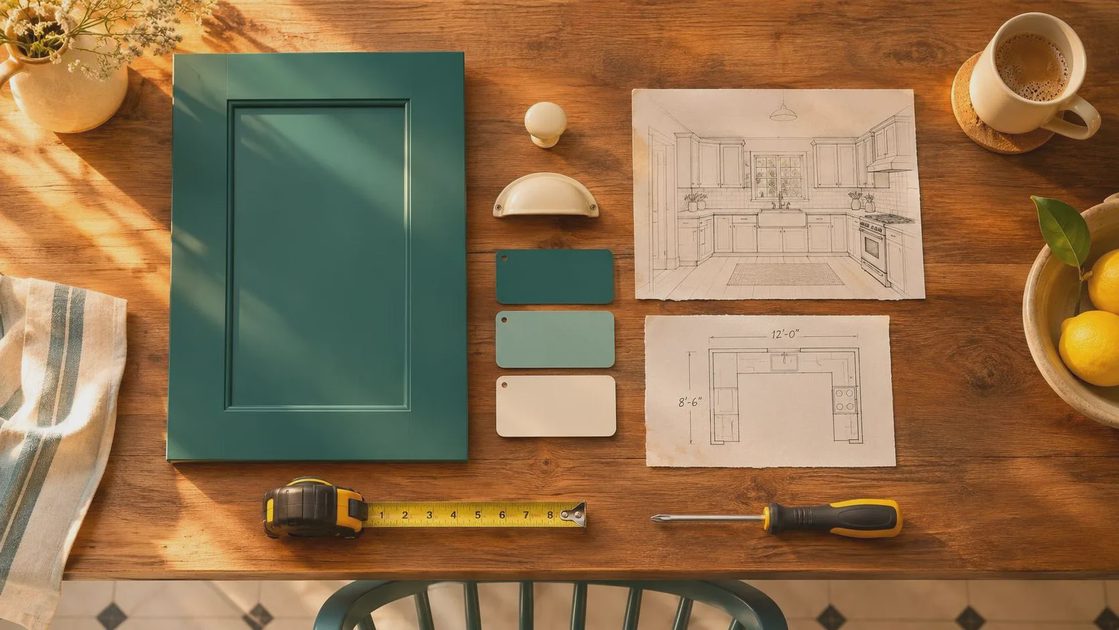
Bring a door sample into the kitchen and look at it in morning light and after dark. A creamy white can look quite different beside a cool gray countertop; a wood tone can pick up warmth from the floor. Put the sample near the backsplash, too, rather than choosing from a small chip under showroom lights.
For a busy cooking space, ask how the finish handles moisture, cleaning, and edge wear. Solid wood, wood veneer, laminate, and painted finishes each come in many qualities, so the construction and care instructions matter more than a reassuring material name alone. Check the backs and edges of sample doors, not just the front.

Door style matters for cleaning, too. A simple flat panel has fewer grooves to wipe than an ornate profile. Shaker-style doors offer a classic framed look, but the inside edge of the frame can collect crumbs and grease. Neither choice is wrong; think about what you’ll be happy to clean on a weeknight.
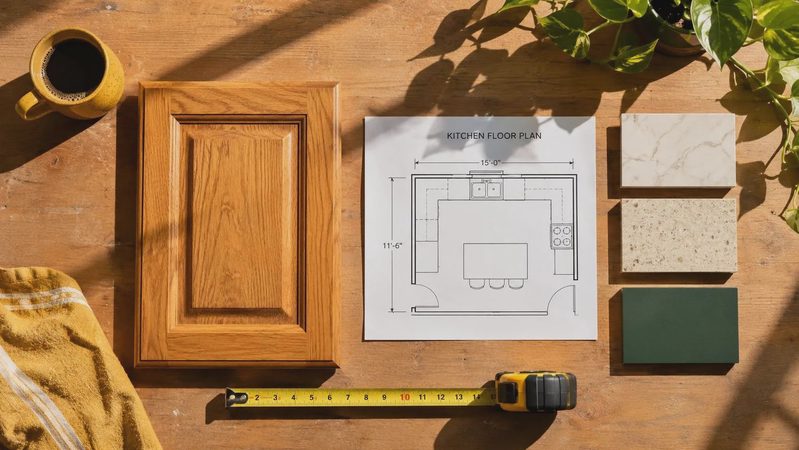
Before ordering, confirm whether new doors will cover more of the cabinet face than the old ones. That can change the look and affect clearance beside walls, appliances, and neighboring doors. Ask to see a drawing or sample layout, especially at tight corners.
What installation and the contract should cover
Kitchen cabinet refacing still creates a work zone, even when the boxes stay put. Ask how long your particular installation is expected to take, which cabinets need to be emptied, and whether you’ll have access to the sink and cooking equipment each evening. Set aside a small station for coffee, breakfast, and a few everyday dishes away from dust and tools.
Your written agreement should identify the door style, color, finish, hardware, and surfaces being covered. It should also explain the payment schedule, estimated start and completion dates, cleanup, warranty, and process for changes. Confirm who handles any plumbing or electrical work associated with modifications; those tasks may require appropriately licensed professionals and local permits.
At the walkthrough, open every door and drawer. Look for rubbing, uneven gaps, loose handles, exposed unfinished edges, and finish damage. Note any concerns on the installer’s punch list before the project is considered complete.
When replacement is the better choice
Skip kitchen cabinet refacing if the boxes need widespread rebuilding or the layout makes daily cooking unnecessarily awkward. A cabinet that blocks the dishwasher or leaves no practical landing space beside the range is a functional issue, not a color issue. Replacement also gives you a cleaner opportunity to add drawers where fixed shelves once wasted deep storage.
This week, inspect the sink cabinet, count your doors and drawers, and photograph the spots that frustrate you. Bring those notes to an estimator along with one question: which problems will the proposed work actually solve? The answer will tell you more than the prettiest sample door.


No comments yet — be the first to share a thought.