The pancake batter was still drying on my stove when I caught myself staring at the kitchen cabinets. In the morning light, honey oak cabinets looked golden and familiar; under the cool ceiling fixture, they looked a little too orange. That is the tricky part of this wood finish: it is not inherently dated, but its surrounding colors can push it in that direction. If your kitchen has honey oak cabinets, you do not automatically need a full demolition and a $40,000 remodel. A few deliberate changes can make the room feel calmer, brighter, and much more like your home.
Why the finish feels dated in some kitchens
Honey oak cabinets became popular because the finish shows wood grain clearly and brings warmth to a room. The problem usually starts when every other surface repeats the same yellow-orange tone. Beige laminate counters, reddish brick backsplash, brass-colored pulls, and amber overhead bulbs can make honey oak cabinets feel visually heavy. None of those choices is terrible alone; together, they create a time capsule.
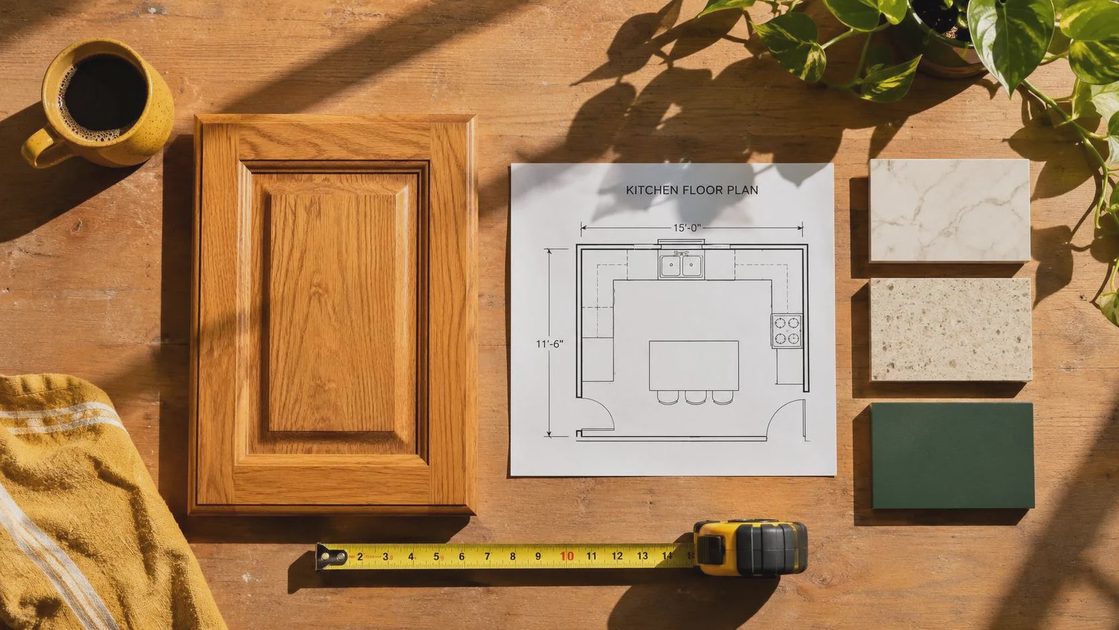
Start by looking at the floor and countertop in daylight. Hold up white printer paper beside each surface. If the counter reads pink, yellow, or green against the paper, that undertone matters more than the color name on the sample. A cooler white quartz can quiet warm wood, while a creamy quartz or soapstone-look surface can make the warmth feel intentional. Samples cost a few dollars and can prevent an expensive color mistake.
Lighting is another inexpensive reset. Replace blue-white bulbs with warm-neutral LEDs around 3000K, then add a small lamp or under-cabinet light. I often use a $25 plug-in LED strip for testing before recommending hardwired lighting. The same cabinets can look muddy at 2700K and balanced at 3000K.
Paint colors that work with warm wood
When clients ask what paint goes with honey oak cabinets, I begin with the room's natural light rather than a trend board. A soft off-white such as Benjamin Moore White Dove can work in a sunny kitchen, but sample it first because its warmth will change beside the wood. Sherwin-Williams Agreeable Gray is another useful test, especially when the floors have beige or taupe notes. For a brighter contrast, a muted blue-green or dusty slate can make the cabinets look more grounded without fighting the grain.
Avoid choosing a stark, blue-based white from a tiny paint chip. It can make honey oak cabinets appear more orange by comparison. Paint a 2-foot-by-2-foot board, move it around the room, and inspect it in the morning, at noon, and after the lights come on. This simple process is more reliable than judging a color beside the paint-store display.
You also do not have to paint every cabinet. A painted island in deep green, charcoal, or warm cream can break up a long run of wood. If the boxes are sturdy and the layout works, refinishing just the island may cost roughly $1,500 to $3,500, depending on preparation and local labor. That is a very different decision from replacing an entire kitchen.
Hardware and counters that make the biggest difference
Hardware is the jewelry of a kitchen, but it still needs to work for real hands. On honey oak cabinets, simple knobs and pulls in aged brass, matte black, or soft bronze can look intentional. I prefer 5-inch or 6-inch pulls on wide drawers because they are comfortable when your hands are wet. Before drilling, tape cardboard templates to the fronts and live with the placement for a day.
If your current knobs are spaced for one screw, do not assume every replacement will fit. Measure the center-to-center distance between screw holes in millimeters. A new pull with a different measurement can leave visible holes, forcing you to fill and touch up the door. That small detail caused one of my former clients a full Saturday of avoidable repair work.
Counters should connect the wood to the rest of the room. White quartz with subtle gray veining gives honey oak cabinets a cleaner backdrop, while butcher block doubles down on warmth and works best when the backsplash adds contrast. A mid-tone laminate can also be smart; current options from Wilsonart and Formica offer stone-like patterns without stone-level pricing. Spend money on the edge detail and installation quality before chasing a premium slab.
Backsplash ideas without a full gut renovation
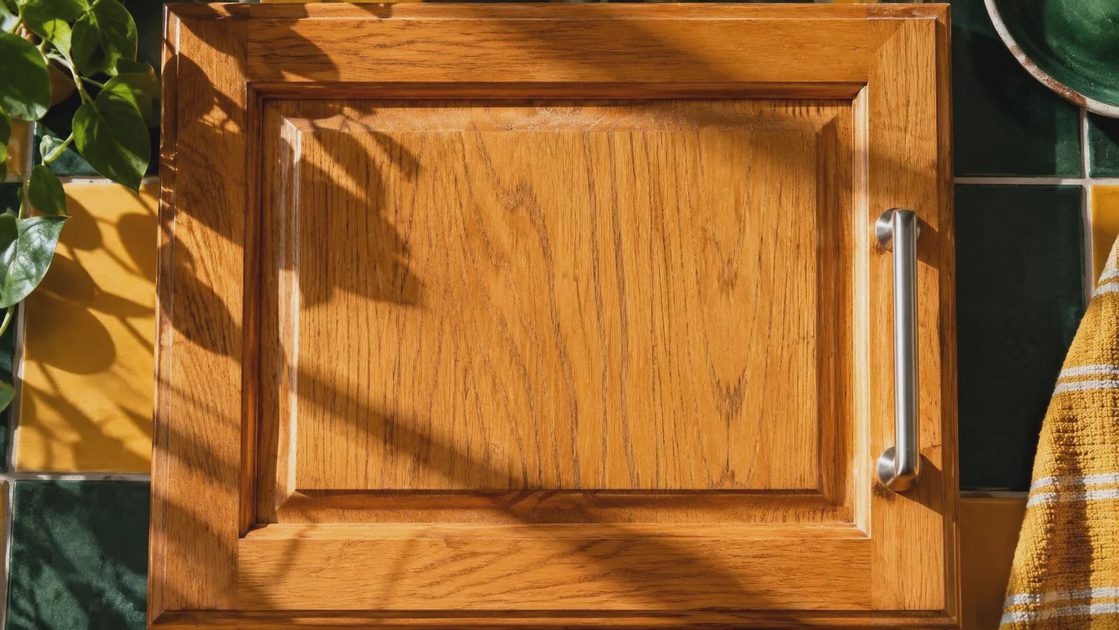
The backsplash is where many kitchens either settle into their age or get a useful second act. With honey oak cabinets, I usually avoid small tan tiles with busy grout. They repeat the cabinet color and create a choppy field. A 3-by-12-inch ceramic subway tile in warm white, soft gray, or muted green gives the eye a calmer surface. Handmade-look tile can add character, but uneven edges require more grout and cleaning.
For a budget refresh, remove only the old backsplash and install tile from the counter to the bottom of the upper cabinets. A straightforward 30-square-foot backsplash might run $800 to $2,000 with professional installation, depending on demolition, tile, and layout. If you are doing it yourself, spend time on the first row; a crooked starting line becomes increasingly obvious near outlets and corners.
A backsplash is also a chance to introduce the color you want elsewhere. I once used a smoky blue-green sample beside warm oak, and the cabinets immediately looked less orange. The color did not erase the wood; it gave it a more relaxed partner.
When painting or replacing makes sense
Painting honey oak cabinets can be worthwhile when the doors are solid, the hinges function, and the layout fits your cooking routine. Professional work typically involves cleaning, sanding or deglossing, priming, and spraying several thin coats. A quote around $3,000 to $8,000 is common for many kitchens, though size and door condition change the number. Ask how the contractor handles the grain, because oak texture can remain visible under paint unless the surface is carefully filled.
Replacement is more sensible when the particleboard is swelling near the sink, shelves are sagging, or the cabinet layout forces daily frustration. If you replace, do not copy the existing plan automatically. Add a drawer stack near the prep zone, a trash pullout where it is actually convenient, or a landing space beside the refrigerator. Function is harder to retrofit than color.
One practical middle path is new doors on sound cabinet boxes. It can update the appearance while preserving much of the existing storage. Compare the total quote with painting before deciding; door replacement is not always cheaper, but it can deliver a different profile and better hardware options.
A realistic refresh plan for this week
Begin with three photographs: one in morning light, one at night, and one from the doorway. Mark what bothers you first. Is it the orange cast, the dated handles, the dark backsplash, or the poor lighting? Solve the dominant problem before buying accessories. A $60 faucet will not rescue a room lit by a harsh blue bulb.
Next, order two paint samples, one countertop sample, and one hardware finish. Leave them beside honey oak cabinets for at least 48 hours. Notice how they look with your floor, appliances, and the mess that actually happens in your kitchen. If the combination works with a cereal bowl, a grocery bag, and a child’s step stool in the frame, it is probably more useful than a perfect showroom image.
A great kitchen does not happen by accident. It happens by how you live in it. For many homeowners, honey oak cabinets are not a problem to hide; they are a warm starting point. Change the light, add contrast, and spend renovation money where it improves Tuesday night cooking. Then make one decision this week: buy the samples, test the bulbs, or measure the pulls before the next beautiful idea talks you into a needless demolition.


No comments yet — be the first to share a thought.