The first thing Henry does when I bring groceries into the kitchen is put his step stool beside the island and ask what needs washing. The second thing he does is spill something. That is why taj mahal countertops caught my attention years ago: they offer the soft, layered look of natural stone without feeling too precious for a kitchen that actually gets used.
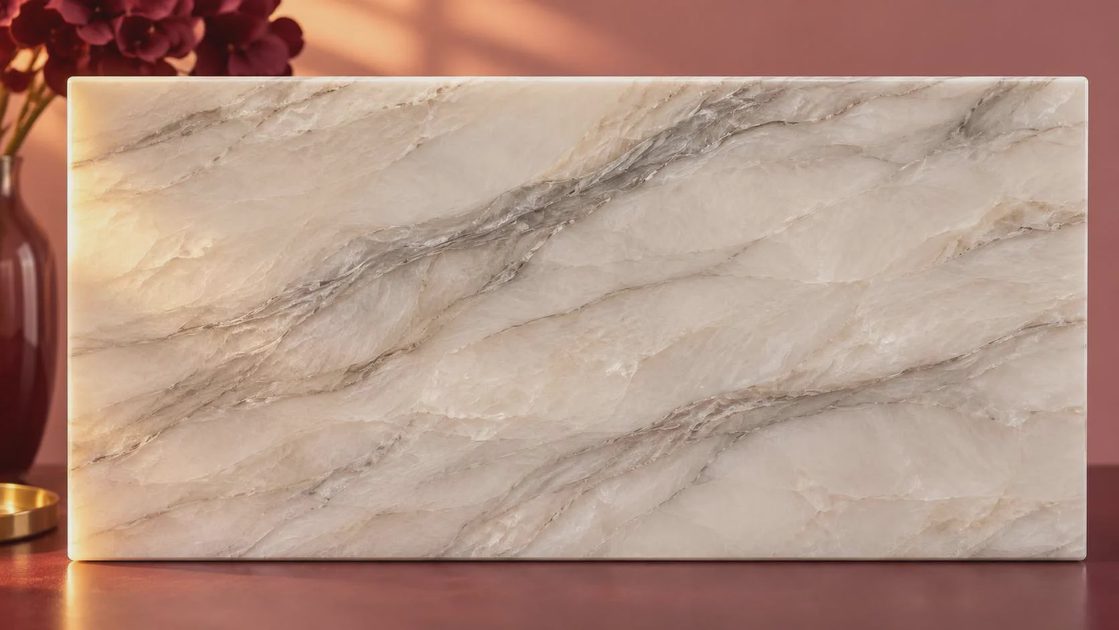
Despite the name, Taj Mahal is not marble. It is generally a quartzite, a natural stone formed when sandstone changes under heat and pressure. Slabs usually show a creamy white or warm ivory background with sweeping beige, taupe, or light gold veining. The exact pattern varies considerably, which is part of the appeal and part of the buying process.
What makes Taj Mahal quartzite different
The most important distinction is between quartzite and engineered quartz. Taj Mahal quartzite is quarried from the earth, so every slab has its own movement, veining, and small mineral variations. Engineered quartz, including products from Cambria, Caesarstone, and Silestone, is manufactured from crushed stone and resins with a more controlled appearance.
True quartzite is hard and generally handles heat better than engineered quartz. A hot Dutch oven still deserves a trivet, but a brief contact with warmth is less concerning than it can be with resin-based materials. The surface is also more scratch resistant than marble, which matters when someone slides a cast-iron skillet across the island instead of lifting it.
That does not make it indestructible. Natural stone can chip at a vulnerable corner, and some slabs sold casually as quartzite are actually softer dolomitic marble or another stone. Ask the fabricator what the slab is made of, how it was tested, and whether the supplier provides a written material description.
What Taj Mahal countertops cost
For most US kitchen projects, Taj Mahal quartzite commonly lands around $80 to $150 per square foot installed, although a smaller job, premium slab, difficult layout, or high-cost metro area can push the total higher. The slab itself may account for $50 to $100 per square foot, with fabrication, sink cutouts, edge work, delivery, and installation added afterward.
A 50-square-foot kitchen might therefore total roughly $4,000 to $7,500 before plumbing changes or backsplash work. Waterfall edges, book-matched panels, thickened edges, and a large farmhouse sink cutout add labor. A standard eased edge is usually more budget-friendly than a laminated edge that makes the counter appear two inches thick.
Compare estimates line by line. One fabricator may include a basic edge and sink cutout while another lists each item separately. I once reviewed a proposal where the base price looked attractive until a $900 waterfall-side charge and separate delivery fee appeared near the bottom. The total was reasonable; the surprise was not.
How to choose the right slab
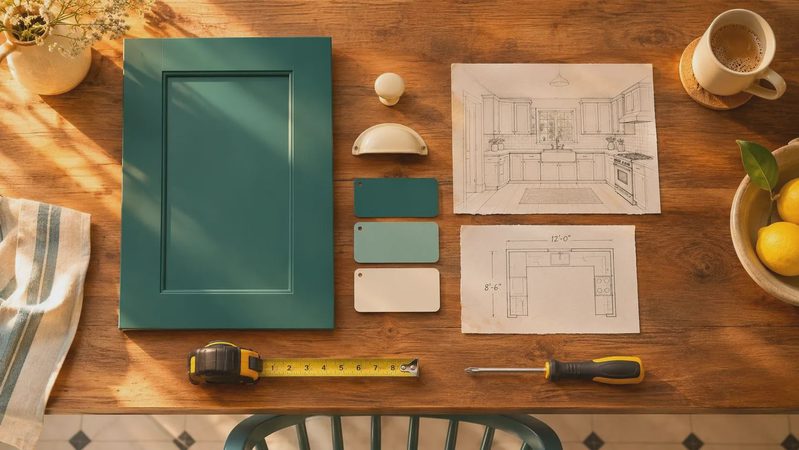
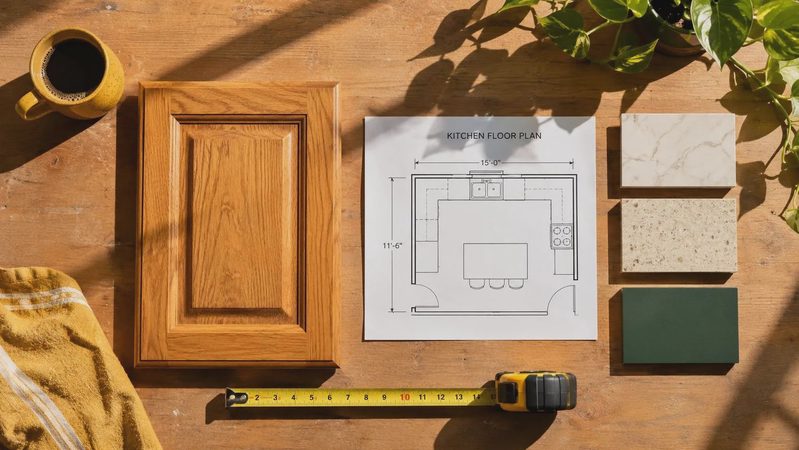
Visit the actual slab if possible, not only a two-inch sample. Small samples hide the scale of the veining, and showroom lighting can make a warm slab appear gray. Bring cabinet and flooring samples with you. Taj Mahal countertops can read creamy beside bright white cabinets, softly beige beside natural oak, or almost gray beside cool blue-gray paint.
Look at the slab from several feet away and then inspect it close up. Ask the yard to place a removable label on the slab you selected and photograph it before fabrication. If your island is longer than the slab, discuss seams early. A seam cannot always disappear, particularly across a strong vein, but good placement can make it feel intentional.
Book matching is another design choice. Two slabs can be cut and opened like the pages of a book so the veining mirrors across a seam or backsplash. It is beautiful, but it uses more material and often increases fabrication costs. For a busy family kitchen, I would spend first on the slab quality and layout, then add book matching only where the pattern truly benefits.
Care, sealing, and everyday messes
Taj Mahal countertops are usually sealed by the fabricator, but sealing does not make natural stone stain-proof. It gives you more time to wipe up coffee, red wine, tomato sauce, or oily curry before the liquid penetrates. Ask what sealer was applied and when it should be renewed; timing depends on the stone's porosity and the product used.
Daily care is refreshingly simple. Use warm water, a soft cloth, and a pH-neutral stone cleaner. Avoid vinegar, lemon-based sprays, abrasive powders, and rough scrub pads because acids can dull or etch mineral surfaces. For a dried pancake smear, I use a damp microfiber cloth and a plastic scraper rather than attacking the spot with a scouring sponge.
A penetrating sealer will not stop etching if the stone contains marble-like minerals. Etching appears as a dull patch rather than a dark stain. That is one reason to view a sample under kitchen lighting and ask whether the exact slab has been tested. Honed finishes can disguise small marks better, while polished finishes reflect more light and often make the veining look sharper.
Colors and cabinet pairings that work
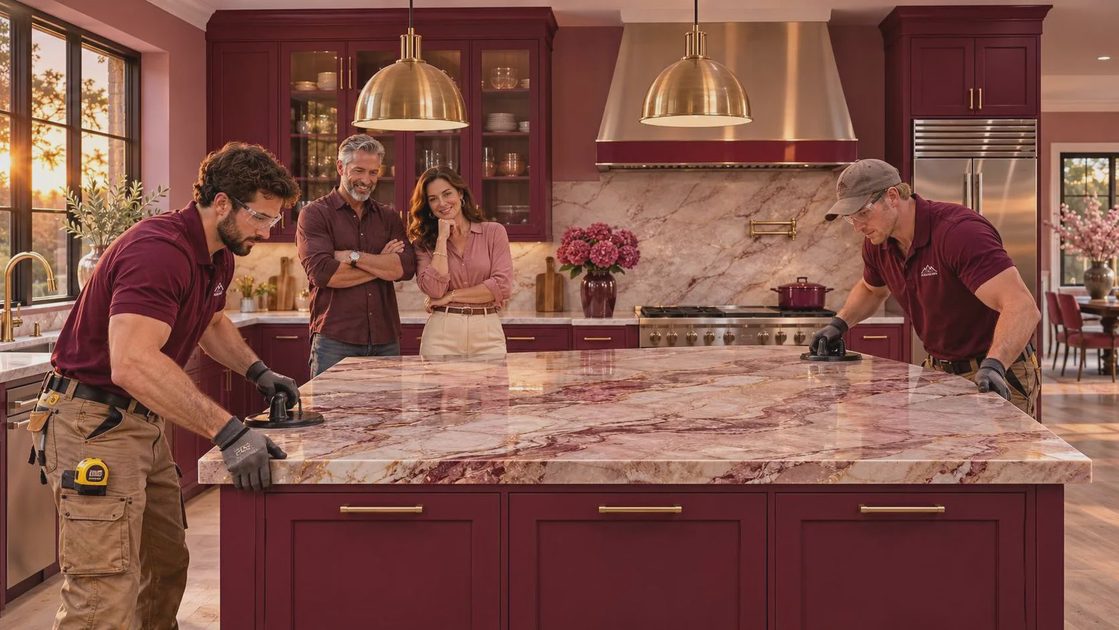
Taj Mahal countertops are especially forgiving with cabinet color because their backgrounds usually combine several quiet neutrals. Warm white cabinets create a light, classic room, but choose a white with a slight cream or neutral undertone. A stark blue-white can make the counter look yellow by comparison.
Natural white oak is one of my favorite pairings. The wood echoes the tan and honey movement in the stone without creating a matchy-matchy effect. Medium walnut can also work, although I would balance it with a lighter backsplash and strong under-cabinet lighting. Green-gray cabinets bring out the cooler notes in some slabs, while charcoal lowers the contrast and gives the room a more tailored feel.
For backsplash material, a simple painted wall, handmade-look ceramic tile, or quiet slab backsplash can all succeed. The mistake is adding another dramatic pattern directly beside a counter that already has movement. In my own specifications, I usually select the slab first, then choose a backsplash that supports its background color rather than competing with the veins.
Questions to ask before ordering
Before committing, ask whether the stone is confirmed quartzite, whether the slab has visible repairs or resin-filled fissures, and which areas will be most vulnerable during cutting. Request the exact dimensions, seam plan, edge profile, overhang measurement, and sink support method in writing.
Clarify who measures the cabinets and what happens if walls are not square. A good installer will template after cabinets are secured, not rely on a rough drawing from an earlier remodeling stage. Confirm that the counter will be supported across wide overhangs; a typical seating overhang may need brackets or other structural support depending on depth and stone thickness.
Also ask about maintenance after installation. Some fabricators offer resealing services, while others provide product instructions and leave the homeowner to schedule it. Taj Mahal countertops are a substantial purchase, so keep the slab invoice, sealer information, and care instructions with your remodeling records.
Are Taj Mahal countertops right for your kitchen?
Choose them if you want natural variation, warm neutral color, and a surface that can handle serious cooking better than many marble options. They are a strong fit for homeowners who appreciate that the counter will not look perfectly identical to a showroom sample.
Choose another material if you need a completely uniform pattern, dislike periodic sealing, or want to place hot cookware directly on the surface without thinking. A well-made engineered quartz or porcelain slab may suit that lifestyle more comfortably. There is no prize for choosing the most expensive material; the right counter is the one that matches your habits.
If you are shopping this week, photograph two or three full slabs, bring home cabinet samples, and request an itemized installation quote. Then make coffee, set the samples beside the toaster, and see what happens in real morning light. A great kitchen does not happen by accident. It happens by how you live in it.

No comments yet — be the first to share a thought.