The first time Henry helped me make French onion soup, he stood on his step stool and stirred three onions with the solemn concentration of a person defusing a bomb. Jack kept asking whether the onions were ready. I kept saying, “Not yet,” because properly caramelized onions take patience, not panic. The result was a dark, savory pot that made our Chicago kitchen smell like a tiny neighborhood bistro.
French onion soup looks simple because its ingredient list is short. In practice, the method matters. Onions need time to soften and brown, the broth needs enough seasoning to carry the dish, and the cheese-covered toast needs to stay crisp at the edges. Once you understand those details, this becomes one of the most satisfying cold-weather meals to make at home.
Start with the right onions and pot
Yellow onions are my reliable choice for French onion soup. They are inexpensive, easy to find, and become sweet without making the finished soup taste sugary. For a four-to-six-serving batch, use about four large yellow onions, or roughly three pounds after trimming. Slice them from root to stem into thin, even half-moons. They do not need to be paper-thin; slices around one-eighth inch cook more evenly and retain a little texture.
The pot matters more than people expect. I use a 5 1/2-quart enameled cast-iron Dutch oven, but a wide stainless-steel pot works well too. A broad base gives the onions room to release moisture instead of steaming in a crowded pile. Add two tablespoons of unsalted butter and one tablespoon of olive oil, then cook over medium heat. The oil raises the smoke tolerance slightly, while the butter brings the rounded flavor I want.
Do not judge the batch during the first 20 minutes. The onions will collapse, release liquid, and look pale and floppy. That is progress. Stir every few minutes, scraping the bottom as needed, and lower the heat if the fond begins turning black rather than brown.
The slow part is where the flavor lives
For dependable French onion soup, plan on 45 to 60 minutes for the onions, depending on the pot and burner. Add a small pinch of salt at the beginning to help draw out moisture. When the onions are soft and golden, continue cooking until they turn a deep amber color. This is where many recipes lose their character: the cook gets hungry and stops at blond.
If the onions seem dry before they are brown, add a tablespoon of water and scrape the base. This loosens the caramelized bits and prevents scorching. You can repeat that trick two or three times. It is more useful than turning the burner higher. I learned this after burning a batch in a shiny copper pan that looked beautiful but heated much faster than I expected.
Once the onions are deeply colored, add one minced garlic clove and cook for 30 seconds. Pour in half a cup of dry white wine, sherry, or a small amount of broth. Scrape thoroughly while the liquid bubbles. The goal is not to make the soup taste like wine; it is to dissolve the browned flavor stuck to the pot.
Build a broth with enough backbone
A good French onion soup needs broth that can stand up to sweet onions and melted cheese. Low-sodium beef broth is the classic choice, although vegetable broth works for a meat-free version. Chicken broth can also work, but it creates a lighter, less traditional result. Use about six cups of broth for four large onions, adjusting the amount if your onions are especially big.
Add two thyme sprigs, one bay leaf, and a few grinds of black pepper. I usually skip extra salt until the end because store-bought broth and cheese both contribute plenty. Simmer uncovered for at least 25 minutes so the flavors can come together. A longer simmer is fine, but boiling hard can make the broth taste flat and evaporate too quickly.
Taste before serving. If it seems sweet, add a teaspoon of sherry vinegar. That small amount does not make the soup sour; it gives the broth contrast. If it tastes thin, simmer it another 10 minutes rather than reaching immediately for more salt. Soup is easier to fix before the bowls are filled.
Toast and cheese are not decoration
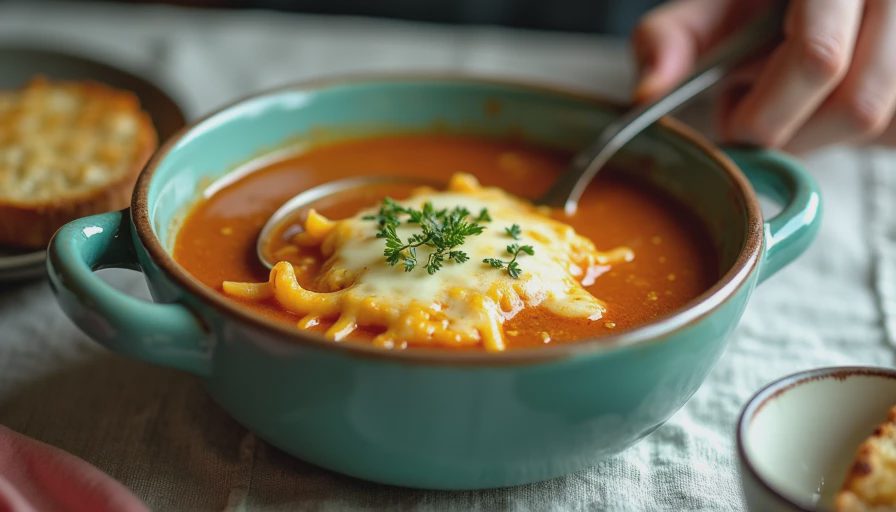
The topping is the reason French onion soup feels like a meal instead of a bowl of broth. Use a sturdy baguette, country loaf, or sourdough cut into slices about three-quarters of an inch thick. Thin sandwich bread collapses too quickly. Toast the slices in a 400-degree oven for about eight minutes, turning once, or toast them in a skillet with a little butter.
Gruyere is the classic cheese because it melts smoothly and brings a nutty flavor. Swiss cheese, provolone, or a mixture of Gruyere and Parmesan can also work. For four bowls, plan on about four ounces of grated cheese. Grate it yourself if possible; pre-shredded cheese often contains starches that affect how smoothly it melts.
Ladle the hot soup into oven-safe crocks or deep bowls placed on a sturdy sheet pan. Float the toast on top, cover it with cheese, and broil until bubbling and browned. Stay nearby. The difference between golden and scorched can be less than a minute under a strong broiler. I use the sheet pan because it catches drips and makes moving four hot bowls much less nerve-racking.
Common mistakes and easy repairs
The biggest mistake is rushing the onions. If they are pale, the soup will be watery-tasting no matter how impressive the cheese looks. The second is using a pot that is too small. Six cups of sliced onions may seem manageable, but they need room to cook down. If your only pot is narrow, work in two batches or expect a longer cooking time.
Another problem is oversalting early. Broth reduces as it simmers, and the cheese adds salt at the finish. Taste after the soup has simmered, then make small adjustments. If you accidentally oversalt, add unsalted broth or water and balance the flavor with a tiny splash of vinegar.
For a weeknight shortcut, caramelize the onions on Sunday and refrigerate them for up to three days. Rewarm them in the pot, add broth and seasonings, and finish the soup while the bread toasts. This turns the longest step into a make-ahead component without sacrificing the deep onion flavor.
A practical serving plan
French onion soup is filling enough for lunch with a green salad, or it can begin dinner with roast chicken, roasted vegetables, or a simple apple-and-fennel salad. Serve it in bowls that can handle high heat, and put a plate underneath each one because melted cheese has a talent for finding the table.
If you are buying cookware for this recipe, spend first on a wide, heavy pot rather than specialized soup crocks. A $60 to $100 Dutch oven can support braises, bread, pasta sauce, and this soup for years. Oven-safe crocks are useful, but four inexpensive ramekins will not improve onions that were rushed in a poor pan.
The best French onion soup is not the one with the most elaborate garnish. It is the one where the onions are deeply browned, the broth tastes balanced, and the toast still offers a little crunch beneath the cheese. Make it once without multitasking, notice how the color changes, and you will be able to repeat it confidently. A great kitchen does not happen by accident. It happens by how you live in it.



No comments yet — be the first to share a thought.