The first time Henry helped me make soup, he dropped three carrot coins on the floor and stirred the pot with a pancake spatula. The kitchen was not camera-ready, but dinner was deeply comforting. If you are wondering how to make chicken soup, you do not need a complicated recipe or a $300 stockpot. You need a few dependable ingredients, enough time for the broth to taste like something, and a pot large enough to keep everything from crowding.
This version is the soup I make when Chicago wind rattles the windows or someone in the house needs an easy meal. It uses bone-in chicken for a richer broth, ordinary grocery-store vegetables, and noodles added at the end so they do not turn soft and swollen. The finished pot makes about six servings and takes roughly 20 minutes of active work.
The ingredients that make the difference
Start with 2 1/2 to 3 pounds of bone-in, skin-on chicken thighs or a small cut-up chicken. Thighs are forgiving, affordable, and harder to dry out than boneless breasts. You will also need 10 cups of water or low-sodium chicken broth, 3 medium carrots, 3 celery stalks, 1 large yellow onion, 3 garlic cloves, 2 bay leaves, 6 black peppercorns, 1 teaspoon kosher salt to begin, and 1 cup of egg noodles or small pasta.
The vegetables do not need to be tiny. Cut the onion into quarters, slice the carrots into half-inch rounds, and cut the celery into similar pieces. Larger pieces hold their shape during simmering and make the soup feel substantial. If you have fresh parsley, use a small handful at the end. A lemon wedge is optional, but a teaspoon of lemon juice can brighten a broth that tastes heavy.
A 5 1/2-quart Dutch oven is my favorite vessel for this job. Enameled cast iron holds steady heat, but a $35 stainless-steel stockpot works perfectly. The only tool I consider essential is a wide spoon for skimming foam. A fine-mesh strainer is useful if you want a clearer broth, though I usually use the chicken and vegetables straight from the pot on a Tuesday night.
How to make chicken soup step by step
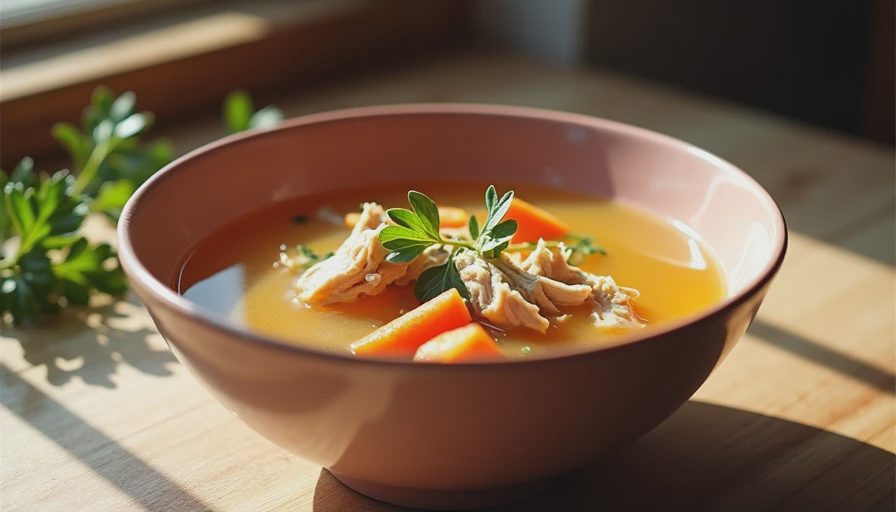
Put the chicken, onion, carrots, celery, garlic, bay leaves, peppercorns, and water or broth into the pot. Bring everything to a gentle boil over medium-high heat, then immediately reduce the heat. You want a few lazy bubbles breaking the surface, not an aggressive boil. Boiling tosses the chicken around, clouds the broth, and can make the meat stringy.
For the first 10 minutes, skim the gray foam that rises to the top. It is not dangerous, and removing every speck is unnecessary, but skimming gives the soup a cleaner appearance and a smoother flavor. Cover the pot partially and simmer for 45 to 60 minutes, until the chicken is tender and pulls easily from the bone. If your chicken pieces are unusually large, give them another 10 minutes.
Transfer the chicken to a plate and let it cool until you can handle it. Remove the bones and skin, then shred or chop the meat into bite-size pieces. Taste the broth before adding more salt. This is the stage where how to make chicken soup becomes less about following a number and more about paying attention: broth brands, chicken size, and evaporation all change the seasoning.
Return the chicken to the pot and bring the broth back to a gentle simmer. Add the noodles and cook according to the package directions, usually 6 to 10 minutes. Turn off the heat while the noodles still have a little firmness. They will continue softening in the hot broth, especially if the soup sits before dinner. Stir in parsley, a small squeeze of lemon, or a pinch of black pepper just before serving.
How to make chicken soup with a clearer, richer broth
If your priority is a clear broth, keep the heat low and resist stirring. You can also simmer the chicken and vegetables for 75 minutes, strain the liquid, and add freshly cooked carrots, celery, noodles, and chicken afterward. That extra step produces a more polished bowl, but I reserve it for guests. For everyday dinner, a little cloudiness is a fair trade for fewer dishes.
For deeper flavor, brown the chicken first. Warm 1 tablespoon of olive oil in the pot and sear the thighs skin-side down for 5 to 7 minutes, until golden. Remove them, pour off excess fat, then soften the onion, carrots, and celery for 4 minutes before adding the liquid. This is not required for good soup, but it adds a roasted note that makes a basic recipe taste as if you worked harder than you did.
Do not add raw chicken to a pot that is already filled with boiling liquid if you can avoid it. Starting everything together in cool liquid allows the meat to release flavor gradually. If you are using leftover roasted chicken, skip the long simmer. Make the vegetable broth for 25 to 30 minutes, then add 2 to 3 cups of shredded cooked chicken during the final 5 minutes so it stays tender.
Common problems and easy fixes
A bland bowl usually needs salt, but add it in small amounts. Start with 1/4 teaspoon, stir, and taste after 60 seconds. A teaspoon of lemon juice or 1/2 teaspoon of apple cider vinegar can also wake up the broth without making it taste sour. If the soup is too salty, add unsalted water, more cooked vegetables, or a handful of rice rather than trying to remove the salt.
Mushy noodles are almost always a timing problem. Cook noodles separately when you expect leftovers, then put them in each bowl and ladle hot soup over them. This is especially helpful for orzo, rice, and thin egg noodles, which continue absorbing liquid in the refrigerator. Store the broth and noodles separately for up to three days for a much better second dinner.
If the soup feels greasy, refrigerate it overnight and lift the solidified fat from the top. During a same-day meal, gently drag a paper towel across the surface to collect excess oil, then discard it. Do not press the towel into the broth. That quick trick has rescued more than one pot after Henry decided extra olive oil was a necessary ingredient.
Small changes for a family kitchen
For younger eaters, chop the chicken finely and use small pasta shapes such as stars, ditalini, or alphabet noodles. Keep the pepper light at the table and let adults add more to their own bowls. Frozen peas can go in during the final 2 minutes, while spinach needs only about 30 seconds. These additions make the meal more colorful without requiring another recipe.
For a heartier dinner, add 1 cup of diced potatoes with the carrots, or stir in a drained can of white beans during the final 10 minutes. A spoonful of grated Parmesan at the table gives the broth savory depth. I like toasted sourdough alongside it, although crackers are the honest choice when dinner needs to happen before homework.
The practical lesson in how to make chicken soup is to design the method around the way you actually live. Use a slow cooker if you are away all day: cook the chicken, vegetables, herbs, and liquid on low for 6 to 7 hours, then shred the chicken and add cooked noodles separately. Use an electric pressure cooker for speed, with about 12 minutes at high pressure and a natural release for 10 minutes.
The takeaway for this week's dinner
If you remember only one approach, begin with bone-in chicken in cool liquid, keep the simmer gentle, season in stages, and add noodles at the end. Those four choices matter more than an expensive pot or a perfectly diced carrot. How to make chicken soup is really how to build layers of flavor without making dinner difficult.
Make a batch this week, portion a couple of servings into shallow containers, and refrigerate them promptly so they cool quickly. Freeze the broth and chicken without noodles for up to three months, then add fresh pasta when you reheat it. A great kitchen does not happen by accident. It happens by how you live in it, one useful pot of soup at a time.



No comments yet — be the first to share a thought.