The first time Henry helped me make a beef stew recipe, he dropped three carrot coins on the floor and announced that the Dutch oven was too heavy to stir. He was right about the pot. He was also still standing on the step stool, wearing pancake batter on one sleeve, so I took over the stirring. The result was a deeply savory dinner with fork-tender beef, soft carrots, and enough gravy for tomorrow's lunch.
This beef stew recipe is designed for a real kitchen rather than a staged one: one sturdy pot, inexpensive chuck roast, ordinary grocery-store vegetables, and enough flexibility for a late school pickup. The oven does most of the work. Your job is to brown the meat patiently, cut the vegetables into useful sizes, and resist lifting the lid every ten minutes.
The ingredients that make the difference
Use 2 1/2 pounds of boneless beef chuck roast, cut into 1 1/2-inch cubes. Chuck has enough connective tissue and fat to become tender during a long, gentle braise. Lean stew meat can work, but it often gives you firmer pieces and less forgiving results. I buy a whole chuck roast when the price is reasonable and cut it myself; the cubes are more even than many pre-cut packages.
You will also need 2 tablespoons of neutral oil, 1 medium yellow onion, 3 garlic cloves, 2 tablespoons of tomato paste, 1/4 cup all-purpose flour, 3 cups low-sodium beef broth, 1 cup dry red wine or additional broth, 1 tablespoon Worcestershire sauce, 1 teaspoon kosher salt to start, black pepper, 4 carrots, 3 Yukon Gold potatoes, and 2 bay leaves. A few sprigs of thyme are lovely, but dried thyme works perfectly well.
The wine is not there to make the dish fancy. Its acidity helps balance the rich beef and adds depth to the liquid. If you do not keep wine around, use broth and add 1 teaspoon of red wine vinegar near the end. That small amount brightens the gravy without making it taste sour.
How to build the stew without rushing
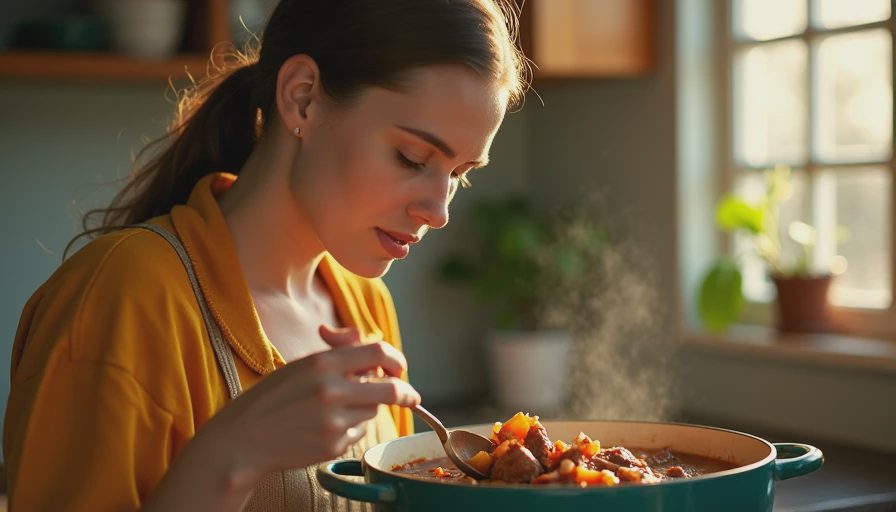
Pat the beef dry with paper towels before seasoning it. Moisture creates steam, while dry surfaces brown. Heat a 5- to 6-quart Dutch oven over medium-high heat, add the oil, and brown the beef in three batches. Give each piece room. Crowding lowers the temperature and leaves you with gray meat instead of a browned crust. Each batch needs about 6 minutes, turning the cubes so several sides develop color.
Move the beef to a bowl, then add the onion to the same pot. Cook for 4 minutes, scraping up the browned bits. Add garlic and tomato paste for 60 seconds. Sprinkle in the flour and stir for another minute. This is the foundation of the thick, glossy gravy. Pour in the wine slowly, scraping the bottom with a wooden spoon, then add broth, Worcestershire sauce, bay leaves, thyme, and the beef with any juices.
Bring the liquid just to a simmer. Cover the pot and place it in a 325-degree Fahrenheit oven for 1 1/2 hours. Add the carrots and potatoes after that first stretch, cover again, and cook for 45 to 60 minutes more. Adding the vegetables later keeps them from collapsing while the beef tenderizes. When a fork slides into the meat with little resistance, the stew is ready.
A beef stew recipe that works on the stovetop, too
No Dutch oven? Use a heavy 6-quart stockpot with a tight lid. After browning the meat and building the liquid, reduce the heat to low and keep the stew at a gentle simmer for about 2 1/2 hours total. Check the bottom every 30 minutes and add a splash of broth if the liquid is reducing too quickly. A hard boil makes the beef fibers tighten, so look for occasional lazy bubbles rather than constant popping.
A slow cooker is another useful option, especially when dinner needs to wait for soccer practice. Brown the meat and aromatics first, then transfer everything except the potatoes to a 6-quart cooker. Cook on low for 7 to 8 hours. Add the potatoes during the final 2 hours if you prefer distinct pieces. The slow cooker version will be slightly less concentrated, but it still gives you tender beef and a practical hands-off dinner.
For pressure cooking, brown the meat in batches using the sauté setting. Cook the liquid and beef at high pressure for 35 minutes, allow a 15-minute natural release, then add cooked carrots and potatoes separately or pressure-cook them for a few additional minutes. This method is fast, but the stovetop or oven version produces the most rounded gravy.
Small adjustments for better flavor
Taste the broth before adding more salt. Low-sodium broth, Worcestershire sauce, and the beef itself all contribute seasoning, and it is easier to add salt than remove it. If the gravy tastes flat, try 1 teaspoon of Worcestershire sauce, a teaspoon of vinegar, or a squeeze of lemon before reaching for more salt.
If the gravy is too thin, remove the lid for the final 15 minutes and let it reduce. For a thicker finish, mix 1 tablespoon of cornstarch with 2 tablespoons of cold water and stir that slurry into the simmering stew. Do not sprinkle dry cornstarch directly into the pot; it clumps immediately and leaves pale pockets in the sauce.
Mushrooms, pearl onions, peas, and parsnips all fit comfortably here. Add frozen peas during the final 5 minutes so they stay green. For a slightly smoky version, replace half the tomato paste with 1 teaspoon of smoked paprika. I would not add all of those extras at once. The best beef stew recipe still has enough restraint for you to taste the beef, onion, and broth.
Serving, storing, and reheating
Serve the stew in warmed bowls with crusty bread, buttered egg noodles, or mashed potatoes. Henry prefers it over small pasta shells because they catch the gravy; Jack prefers bread because it makes fewer dishes. A simple green salad with a sharp vinaigrette keeps the meal from feeling too heavy.
Cool leftovers in shallow containers and refrigerate them within two hours. They keep well for up to four days. The flavor improves overnight as the broth settles, which makes this a useful Sunday cooking project for a busy Monday. Reheat gently on the stovetop over medium-low heat, adding 2 or 3 tablespoons of broth per serving. Microwave portions at 70 percent power, stirring halfway through.
Freeze the stew for up to three months in pint containers, leaving about an inch of space for expansion. Potatoes can become slightly grainy after freezing, so many cooks freeze the beef and gravy separately and add fresh potatoes when reheating. Label the container with the date; frozen mystery food is how perfectly good dinners disappear behind a bag of peas.
My weeknight checklist
Start by cutting the beef and vegetables before turning on the burner. Set out the broth, flour, tomato paste, and seasonings so you are not hunting through a cabinet with hot oil on the stove. Brown the beef in batches, even if that adds 10 minutes. That step is where much of the final flavor begins.
Plan for about 25 minutes of active preparation and roughly 2 1/2 hours of cooking. The long timing is not a flaw; it is what transforms a $12 to $20 chuck roast into a meal that can feed four adults with leftovers. If you are serving six, add another pound of beef, two extra carrots, and 1 cup of broth rather than simply increasing the potatoes.
This beef stew recipe is forgiving once you understand the sequence: brown, soften, deglaze, braise, then add the vegetables. It does not require a showroom kitchen or an expensive appliance. My 20-year-old enameled pot has a chipped rim and still makes better stew than several newer gadgets I have tested.
A great kitchen does not happen by accident. It happens by how you live in it. This week, choose a pot that can move from stovetop to oven, put on an apron you do not mind splattering, and make a beef stew recipe that gives dinner—and tomorrow's lunch—a head start.

No comments yet — be the first to share a thought.