At 7:12 on a Tuesday morning, Henry is standing on his step stool asking whether pancakes count as a vegetable, while I am scraping yesterday's oatmeal off the saucepan. This is exactly when breakfast ideas need to be practical, not precious. The best options use ingredients already in the kitchen, take less than 20 minutes, and leave enough energy for finding a missing shoe.
Start with a breakfast rhythm, not a complicated recipe
A useful breakfast routine has three lanes: something fast for rushed mornings, something that can be prepared ahead, and something genuinely enjoyable for weekends. In our house, the fast lane is toast with peanut butter and sliced banana, or a fried egg over leftover rice. Neither requires a special appliance, and both can be made while the coffee brews.
For make-ahead mornings, baked oatmeal is hard to beat. I mix rolled oats, milk, one mashed banana, cinnamon, a pinch of salt, and frozen blueberries in an 8-inch square baking dish. After about 30 minutes at 375 degrees Fahrenheit, it keeps in the refrigerator for four days. A 3/4-cup portion reheats in the microwave in roughly 60 seconds. Add yogurt if it feels dry.
The weekend lane is where breakfast ideas can be a little more generous. Pancakes, baked eggs, or a skillet of potatoes with peppers make the kitchen smell like someone planned ahead, even when the night before involved takeout and a sink full of glasses.

Breakfast ideas for rushed weekday mornings
The weekday test is simple: Can one person assemble it with one hand while helping a child zip a coat? Overnight oats pass. Stir 1/2 cup rolled oats, 1/2 cup milk, 1/4 cup Greek yogurt, and a teaspoon of maple syrup in a 12-ounce jar. Refrigerate overnight, then add berries, chopped walnuts, or grated apple in the morning. If you dislike cold oatmeal, warm it for 45 seconds and stir before eating.
Egg muffins are another dependable option. Whisk six eggs with 1/4 cup milk, shredded cheddar, chopped spinach, and diced cooked sausage or mushrooms. Divide the mixture among a greased 12-cup muffin tin and bake at 350 degrees for 18 to 20 minutes. Two muffins make a substantial breakfast, and the rest can be refrigerated for three days. They are also a good use for the vegetables that have started looking optimistic rather than fresh.
When even that sounds like too much, keep tortillas in the freezer. A breakfast taco needs only a scrambled egg, grated cheese, and salsa. Warm the tortilla directly in a dry skillet for 20 seconds per side. The small step matters: a cold tortilla cracks, and then breakfast becomes a shirt-changing event.
Make-ahead breakfast ideas that actually hold up
Some make-ahead foods improve after a night in the refrigerator; others become rubbery, soggy, or oddly wet. Choose carefully. Frittata is excellent because the eggs stay tender when reheated gently. Use a 10-inch oven-safe skillet, cook vegetables first, then pour in eight beaten eggs and finish in a 375-degree oven for 10 to 12 minutes. Let it cool before slicing so the pieces set cleanly.
Breakfast sandwiches work well too. Split English muffins, add cooked eggs and cheese, wrap each sandwich in parchment, and freeze them in a resealable bag. Reheat one in the microwave for 60 to 90 seconds, then let it rest for a minute. I prefer parchment to plastic wrap because it can go straight into a toaster oven after thawing.
Granola is useful, but I make it in small batches. Homemade versions often call for more oil and sugar than expected. For a balanced batch, combine 3 cups oats, 1/2 cup almonds, 1/3 cup pumpkin seeds, 1/3 cup maple syrup, 2 tablespoons olive oil, and cinnamon. Bake at 325 degrees for 25 minutes, stirring once. Store it in a glass jar for about two weeks.
Breakfast ideas for kids and grown-ups together
Cooking for a child does not require making two separate meals. It does require serving familiar components alongside one less-familiar one. For example, put toast, scrambled eggs, and sliced strawberries on the plate, then add a small spoonful of avocado. Henry may ignore the avocado for three mornings and suddenly eat it on Thursday. That is not a failure; it is simply how five-year-olds conduct product testing.
A yogurt board is easy for a family because everyone builds a different bowl. Set out plain or vanilla yogurt, granola, banana slices, berries, raisins, and sunflower seeds. Use small bowls so the counter does not become a buffet with a 14-inch footprint. For younger children, cut grapes lengthwise and avoid whole nuts.
French toast is a useful bridge between weekday and weekend cooking. Slightly stale bread absorbs the custard better than fresh sandwich bread. Whisk two eggs, 1/2 cup milk, vanilla, and cinnamon, then soak four slices briefly rather than letting them collapse. Cook over medium heat in butter until both sides are golden. A cast-iron skillet holds heat beautifully, but a nonstick pan is easier when a child wants to help.
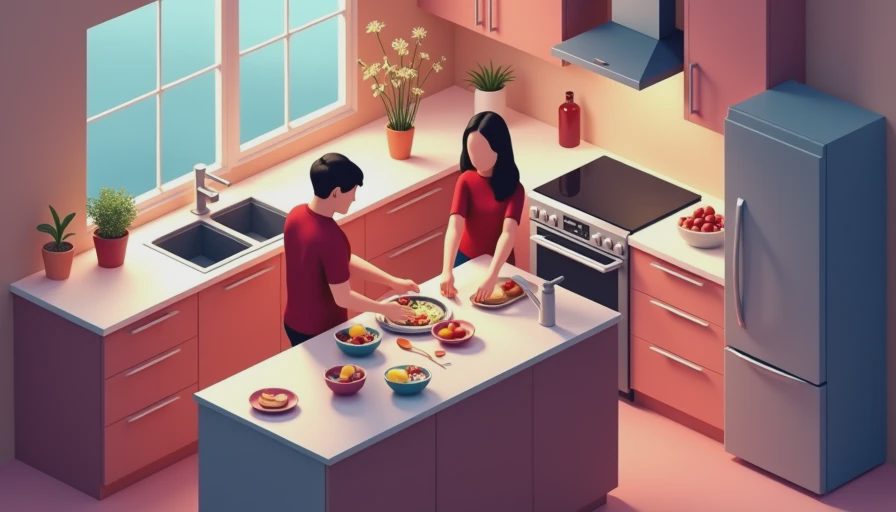
The small tools that make breakfast easier
A few inexpensive tools do more for breakfast than a cabinet full of single-purpose gadgets. A $17 OXO-style angled measuring cup lets you read liquid measurements from above, which is helpful when the counter is crowded. A 10-inch silicone spatula handles eggs without scratching a coated pan, and a quarter-sheet pan is the right size for roasting tomatoes or reheating two servings of potatoes.
I also keep a small digital scale beside the flour canister. It is especially useful for pancakes, where too much flour creates dense, dry results. Weighing 240 grams of flour for a batch is more consistent than scooping it into a measuring cup. If you bake often, a $25 scale can save more ingredients than an expensive mixer.
The appliance question is less dramatic than retailers suggest. A toaster oven is valuable if you reheat sandwiches, toast nuts, or bake small portions. A standard toaster earns its counter space if toast is the main event. We own both, but only because our narrow Chicago kitchen has a dedicated shelf near the outlet. Measure before buying: many toaster ovens are 16 to 20 inches wide and need clearance around the sides.
A simple plan for better mornings this week
Choose two breakfast ideas for the coming week, not seven. Make baked oatmeal on Sunday and prepare overnight oats for two nights. Put eggs, tortillas, and fruit at eye level in the refrigerator so the quickest ingredients are visible first. Move the jam and specialty sauces to the door or a lower shelf; they should not block the food that gets eaten daily.
On Wednesday, use leftovers intentionally. Rice becomes an egg bowl, roasted sweet potatoes become a hash, and extra cooked vegetables can go into a frittata. This reduces both prep time and the small frustration of discovering a forgotten container at the back of the fridge.
Finally, notice where the routine breaks. If the skillet is stored across the kitchen, move it closer to the stove. If berries spoil before anyone eats them, buy frozen berries instead. If pancakes create too many dishes, use one bowl and a whisk, then cook them on a griddle or large skillet. A great kitchen does not happen by accident. It happens by how you live in it, one manageable morning at a time.



No comments yet — be the first to share a thought.