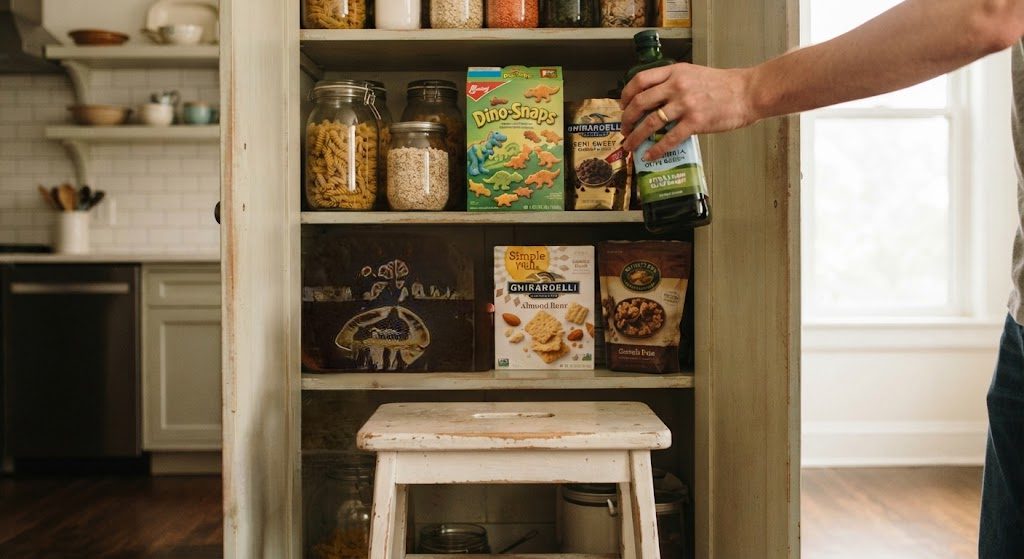
Our pantry used to be a disaster. Not visually — I could close the door and pretend it was fine. But functionally, it was a system that worked for exactly zero members of this household.
The snacks Henry wanted were on the top shelf. The olive oil I needed for dinner was behind three boxes of pasta on the middle shelf. The baking supplies were scattered across two different shelves because I'd put things back wherever they fit instead of where they belonged. Every afternoon at 4 PM, Henry asked for a snack, and every afternoon I stopped what I was doing, walked to the pantry, and retrieved something from a shelf he couldn't reach.
Then I spent one Sunday afternoon reorganizing the whole thing around a single question: what if this pantry worked for everyone in the house, not just the tallest person?
The Zones That Changed Everything
I divided the pantry into three vertical zones based on reach.
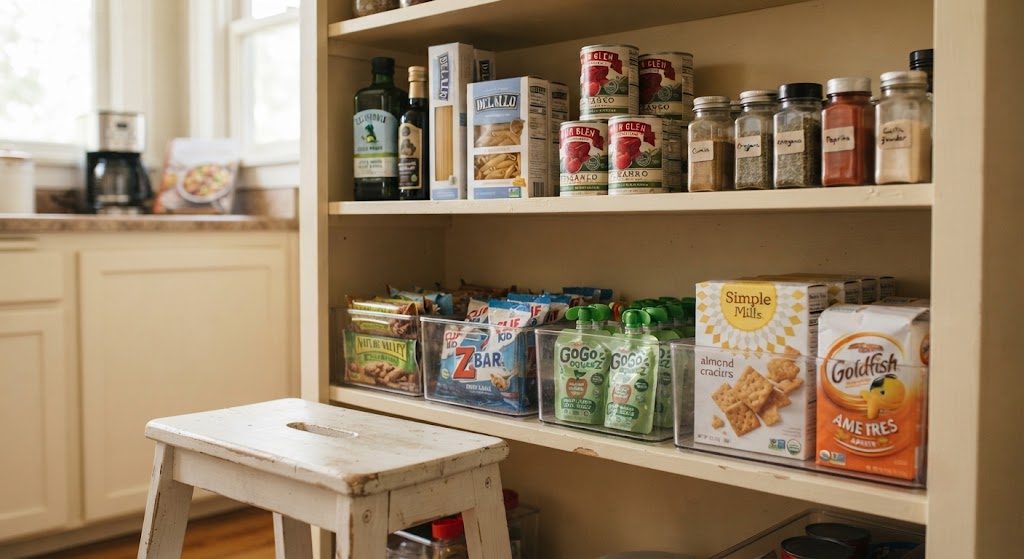
Low zone: Henry's shelves. The bottom shelf and the one just above it are now entirely his. Snacks he's allowed to grab without asking — apple sauce pouches, granola bars, crackers, dried fruit — live in clear bins he can pull out and put back himself. His plates, cups, and bowls are here too, because a five-year-old who can get his own snack can also get his own plate. A small basket holds "sometimes" snacks — fruit leather, a few cookies — that he knows to ask about first. The basket gives us a buffer between "I see it" and "I'm eating it."
Middle zone: daily cooking. This is where the olive oil lives now, along with salt, pepper, dried pasta, rice, canned tomatoes, beans, broth. Everything I reach for on a Tuesday night at 5:45 PM when I haven't thought about dinner yet. Spices are in a shallow drawer nearby, not in the pantry — I learned years ago that spice jars on a deep shelf disappear behind each other and you end up buying a third jar of cumin because you can't find the two you already own.
High zone: occasional and bulk. The top shelf holds things I use rarely or in large quantities. The stand mixer attachments. The extra bag of flour. The birthday candles. The slow cooker that only comes out for chili season. I need a step stool for this shelf, but I don't need it often, and that's the point.
The Snack Bin Rule
The clear bins on Henry's shelf came from a hardware store and cost about $6 each. They're not aesthetic. They're functional. Each bin has one category: crunchy snacks in one, sweet snacks in another, dried fruit in a third. The bins are shallow enough that nothing gets buried at the bottom.
The rule that stopped the negotiation: if it's in your bin, you can have it without asking. If it's not in your bin, it's a "sometimes" snack and we talk about it first. The rule isn't about restriction — it's about clarity. Henry knows the system. I'm not the snack gatekeeper anymore. The pantry is.
What I Keep (And What I Stopped Buying)
I used to buy snacks I thought a kid should want — organic this, low-sugar that. Henry didn't eat them. They sat in the pantry until they expired, and I threw them away feeling guilty twice: once for the wasted food, once for the wasted money.
Now I stock what he actually eats. Apple sauce pouches. Peanut butter crackers. Cheese crackers that are basically orange dust on a carbohydrate. Yogurt-covered raisins that I'm pretty sure count as candy. He eats vegetables at dinner. Snacks are snacks.
For the adults, the pantry holds things that can become a meal with minimal effort. Canned chickpeas and coconut milk become a curry. Pasta and a jar of good marinara. Rice and canned black beans and salsa. These aren't aspirational ingredients I hope to use someday. These are Tuesday night ingredients.
The Step Stool Lives Here Now
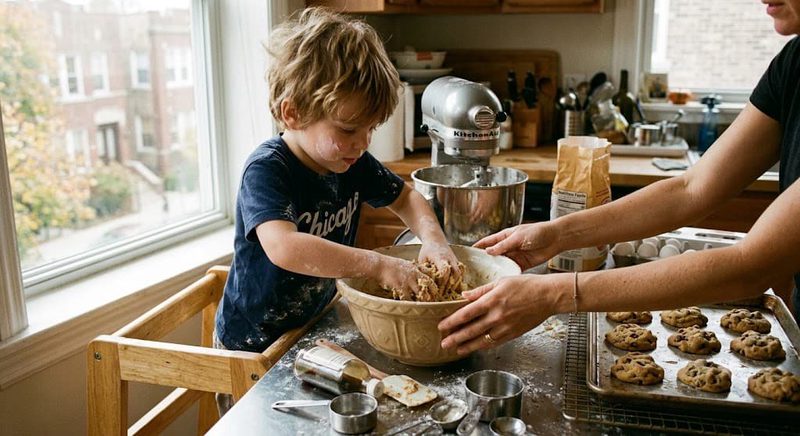
Henry's step stool used to travel around the kitchen. It was never where anyone needed it. Now it lives permanently in front of the pantry. He drags it into position when he wants a snack from his middle shelf. He pushes it back when he's done. Sometimes he pushes it to the counter to "help" with dinner. It has a home, so it actually gets put away.
This is the detail that made the whole system work. If the stool lived across the kitchen, he wouldn't use it. If he couldn't reach his own snacks, the low zone would be pointless. The stool is the bridge.
A Pantry Is Never Done
The bins get messy. Henry puts the crackers back in the wrong bin sometimes. I run out of olive oil and don't notice until I'm halfway through a recipe. The system breaks down and gets rebuilt every few weeks.
That's fine. A pantry is a living thing. It changes as your kid grows and your cooking changes and your Tuesday nights change. The point isn't perfection. The point is a kitchen that works for the people who actually live in it, at every height.
A great kitchen doesn't happen by accident. It happens by how you live in it.

No comments yet — be the first to share a thought.