The first kitchen knife I bought after moving into my Chicago apartment was shiny, overpriced, and weirdly slippery. I remember trying to dice an onion while Henry stood on a step stool chanting for more pancake batter, and realizing the problem was not my skills. The tool just did not fit the way I cook. A better kitchen knife is not about showing off in a drawer. It is about control, comfort, and not dreading supper at 6:15 on a Tuesday.
If you are remodeling a kitchen or simply replacing a tired blade, start with the basics: what you cut most often, how the handle feels in your hand, and whether the knife can stay sharp without constant drama. A good blade should make tomatoes easier, onions faster, and chicken safer. It should also feel like something you can reach for every day without thinking twice.
What a good blade needs to do
A good kitchen knife should move through food cleanly, balance well in your hand, and give you enough knuckle clearance to work without scraping the board. That sounds simple, but it is where a lot of bargain options fall apart. If the edge feels dull after two uses, or the handle is so thick your grip gets tired, you will stop using it and start avoiding prep.
For most households, I like a classic 8-inch chef-style blade because it does the widest range of jobs: slicing peppers, mincing garlic, trimming herbs, and breaking down a roast chicken. If your hands are smaller, a 6-inch version can feel friendlier. The goal is not to own the fanciest blade in the store. It is to own one that becomes automatic, the way a good pair of sneakers disappears when they fit right.
I often tell readers to spend in the $40 to $120 range first. That is where you can find solid everyday options like the Victorinox Fibrox Pro, which is popular because it is light and easy to control, or a Wüsthof Classic if you want a heavier feel and are willing to pay more. A kitchen knife in that range usually gives you better steel, better fit, and a handle that does not punish your wrist after a long prep session.
Blade size, shape, and the jobs you actually do
Most people think they need a huge blade because it looks professional. In real kitchens, size should match routine. If you mostly slice fruit, prep sandwiches, and chop vegetables for one or two people, a smaller blade can feel less clumsy. If you batch-cook soups, roast vegetables, or break down big piles of herbs, the extra length of an 8-inch blade saves time because you can rock through food instead of sawing at it.
Shape matters too. A curved belly helps with rocking cuts. A straighter edge can feel better for push-cutting and for cooks who want more control over each slice. I like to hold a blade at the store and make a few pretend cuts in the air. If the tip feels heavy, the handle digs in, or the balance point feels way off, trust that instinct. A kitchen knife should feel calm, not theatrical.
For families, I also like choosing one main blade that can handle both dinner and weekend projects. When I am chopping celery for soup or slicing cucumbers for Henry’s lunch, I want one reliable tool, not a set that looks nice but performs unevenly. That is why so many home cooks end up using just one favorite blade while the rest gather dust.
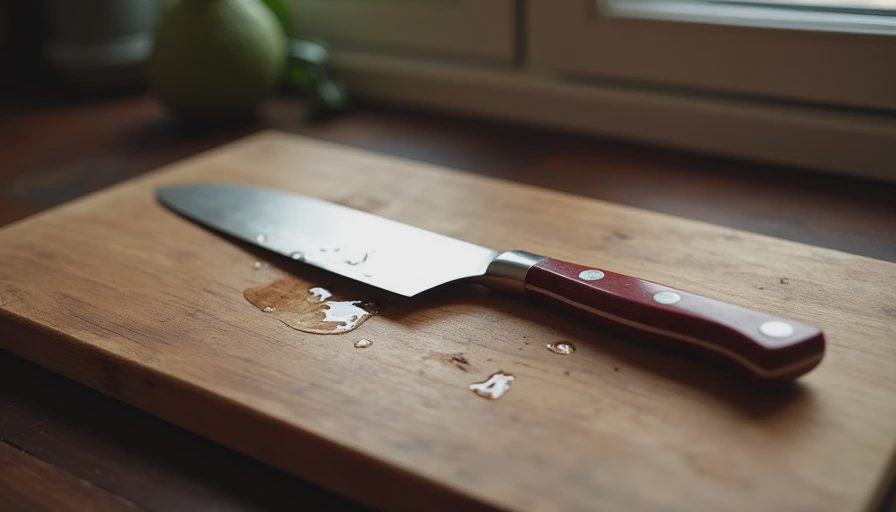
Steel, handle, and balance are the quiet dealmakers
A kitchen knife with decent steel does not need constant babying, but it should hold an edge long enough to make sense for home use. German-style stainless steel tends to be a little tougher and easier to maintain. Japanese-style blades are often harder and can feel sharper out of the box, but they sometimes ask for a lighter touch. Neither is automatically better. The better choice is the one that fits your habits.
Handle material matters more than people expect. Wood feels warm and classic, but it needs more care. Textured composites and molded synthetics are usually easier to keep clean, which is helpful in a busy kitchen where someone is always setting the knife down next to a wet sponge. Balance matters just as much. If the blade feels like it is pulling your wrist forward, you will work harder than you should.
This is where trying before buying helps. Hold the knife where the handle meets the blade and notice whether the tool feels steady or tip-heavy. A kitchen knife that balances well can feel safer even if it costs less than the polished showpiece next to it. That is one reason a plain-looking blade can outperform a beautiful one in daily use.
How to keep it sharp without turning it into a project
To keep a kitchen knife sharp, you do not need a dramatic routine. You need a few small habits. Use a wood or plastic cutting board, not glass or stone. Wash and dry the blade by hand instead of letting it rattle around in the sink. Store it in a drawer insert, a block, or a magnetic strip so the edge is not banging into forks.
I also recommend a honing rod for regular maintenance. Honing does not replace sharpening; it just realigns the edge between sharpening sessions. A lot of people think their blade is dull when it is really just out of alignment. For home cooks, sharpening every six to twelve months is a decent rhythm, depending on use. If you cook nightly, a local knife sharpener or a good mail-in service can be worth the $10 to $25 per blade.
If you want a lower-effort path, some people are happy with a pull-through sharpener, but I prefer a professional stone or service for nicer blades. A kitchen knife that is maintained well feels almost new again, and that is cheaper than replacing a decent tool too soon.
When it is time to upgrade or add a second blade
If your kitchen knife is older and you keep fighting it, the fix is usually not more force. Look for chips in the edge, a handle that has cracked or loosened, or a blade that stays dull even after sharpening. Those are signs the tool has reached the end of its useful life. A cheap replacement can be smart if the old one was never comfortable in the first place.
Some households do well with two blades: one 8-inch workhorse and one smaller paring knife for strawberries, garlic, and quick trim jobs. That is enough for a lot of real kitchens. You do not need a matching set of twelve to cook well. You need one main blade you trust, plus a backup for detail work.
If you are shopping during a remodel, try to buy the knife before the rest of the accessories. It is one of those purchases that affects the feel of the whole kitchen. The right kitchen knife makes the counter feel more functional, the prep routine less annoying, and the weeknight dinner scramble a little calmer. A great kitchen doesn't happen by accident. It happens by how you live in it.
A simple test before you buy
Before you spend money, hold the knife, pinch the blade, and slice something soft if the store allows it. A tomato, a cucumber, or even a paper towel test can tell you a lot. If the knife slides instead of cuts, feels awkward, or leaves your hand tired after a minute, keep looking. The best blade is the one you will still enjoy using after the novelty wears off.
If you want the fastest upgrade this week, sharpen what you own, replace the board if it is hard on the edge, and then choose one better blade instead of a whole set. That single decision usually does more for everyday cooking than any gadget tucked into a drawer.

No comments yet — be the first to share a thought.