At 6:15 on a Tuesday evening, Henry was standing on his step stool asking whether dinner was ready, Jack was rinsing soccer cleats in the utility sink, and I was trying to rescue a tray of vegetables from the oven. This is exactly when an air fryer earns its counter space. It can turn chicken thighs, frozen fries, salmon, or yesterday's pizza into dinner without heating the whole kitchen or requiring constant stirring. The trick is choosing a model that fits your actual routine rather than the appliance that photographs best online.
Start with your counter and your household
Before comparing cooking presets, measure the landing space. Many basket models are about 12 inches wide, 14 inches deep, and 13 inches tall, but the rear and top need breathing room. I once specified a beautiful appliance garage for a client and discovered that the open door blocked the only drawer containing spatulas. The kitchen looked polished; using it was ridiculous.
For two people, a 4-quart basket is often enough for a pound of vegetables or two portions of chicken. A family of four will usually appreciate 5.8 to 7 quarts, especially when dinner includes protein and a side. A dual-basket model, such as the Ninja Foodi 6-in-1 8-quart, is useful when one basket holds broccoli and the other cooks chicken at a different temperature. It also takes more width, so measure before ordering.
Think about where the appliance will live between meals. A 25-pound countertop oven is not something most people will happily move into a pantry every night. If your counters are already crowded with a stand mixer, coffee maker, and knife block, a compact basket may be more realistic than a large oven-style unit. A great kitchen does not happen by accident. It happens by how you live in it.
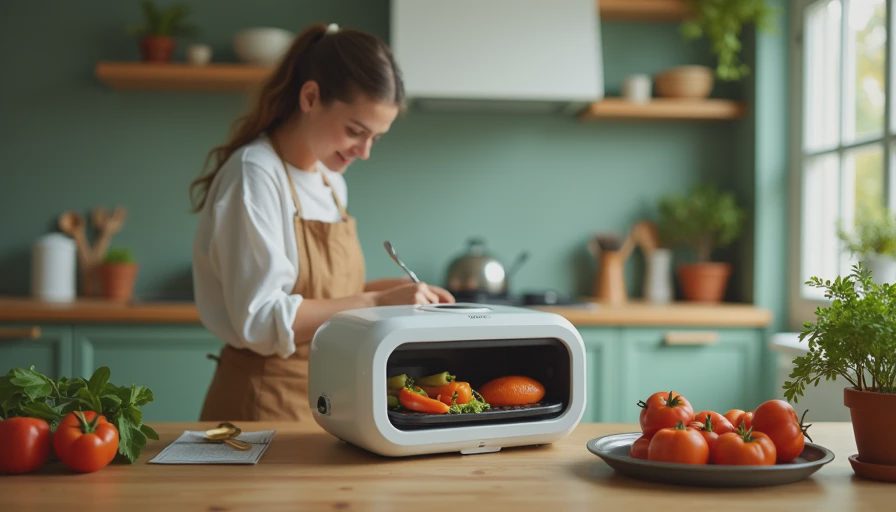
Basket style or toaster-oven style?
A basket air fryer is the straightforward choice. Food sits in a perforated drawer, hot air circulates around it, and shaking halfway through helps with browning. Models from Cosori, Instant, and Philips commonly offer simple digital controls, removable dishwasher-safe parts, and prices ranging from roughly $70 to $180. They are especially good for weeknight foods that benefit from a quick, crisp finish.
An oven-style air fryer uses racks or trays and often includes toast, bake, broil, and dehydrate settings. The Cuisinart TOA-60 and Breville Smart Oven Air Fryer Pro are examples of this broader format, with prices commonly ranging from about $180 to $400. You can fit a small pizza or several slices of toast, but cleanup involves more surfaces and the tall footprint can compete with upper cabinets.
Neither design is automatically better. The basket model wins when speed and easy cleanup matter most. The oven style makes more sense if you want one appliance to replace a toaster oven for daily tasks. In my kitchen, I would rather have a smaller appliance used five times a week than a magnificent one that lives behind the mixer.
What cooks well and what does not
An air fryer is essentially a compact convection oven with strong airflow. It is excellent for foods with a little surface fat or a coating: Brussels sprouts, breaded fish, chicken wings, potato wedges, quesadillas, and reheated roasted vegetables. A light spray of avocado or olive oil can encourage browning, but soaking food in oil defeats the point and can make the basket smoky.
Do not expect a basket appliance to replace a stockpot or a full-size oven. Wet batter usually drips through the rack before it sets, and crowded food steams instead of browning. Henry once poured a pile of frozen tater tots into the drawer nearly to the rim. The outside pieces browned while the center stayed soft. Since then, I cook in a single loose layer and shake the basket once or twice.
For reliable results, preheat when the manual recommends it, pat wet ingredients dry, and leave space between pieces. A 5.8-quart basket can hold more than a 4-quart basket, but capacity is not the same as usable cooking area. The shape of the basket matters as much as the number printed on the box.
Features worth paying for
The most useful feature is a basket that slides out smoothly and releases without a wrestling match. A clear cooking window is pleasant but not essential; opening the drawer briefly does not ruin dinner. A shake reminder can help with fries and vegetables, while a temperature range that reaches 400 or 450 degrees gives you more flexibility for roasting and crisping.
Dishwasher-safe parts are valuable for families, although hand washing can preserve a nonstick finish longer. Look for a removable plate that is easy to lift and rinse, not one with tiny channels that trap crumbs. Digital controls are convenient, but physical knobs are perfectly functional and often quicker when your hands are covered in marinade.
Smartphone connectivity sounds impressive, yet I rarely want an alert telling me that chicken has finished when I am already standing in the kitchen. Spend the extra $30 on a larger basket or sturdier drawer instead. A useful accessory is a small silicone liner, but it should not block airflow completely or be used at temperatures beyond its instructions.

Noise, heat, and cleanup in a real kitchen
Every air fryer has a fan, and some sound like a compact bathroom vent. If your kitchen opens directly into the living room, check reviews for noise before buying. The appliance also releases hot air from a vent, so do not tuck it beneath a cabinet or place it beside a wall that could discolor. I leave several inches of clearance and pull the unit forward before cooking.
Cleaning is easiest when you wipe the drawer after it cools and do not let grease sit overnight. For baked-on residue, soak the removable parts in warm water with dish soap rather than attacking the coating with a metal scrubber. Keep the heating element dry. If you cook bacon frequently, expect more cleanup than the product photos suggest.
A practical buying plan
First, measure the available counter depth, width, and overhead clearance. Next, decide whether you need two portions or a family-sized batch. Then choose basket or oven style based on what you already own. If you have a dependable toaster oven, a basket air fryer adds speed. If your toaster is failing and your oven is small, an oven-style model can consolidate equipment.
Set a budget of $80 to $150 for a capable everyday basket model, $150 to $250 for a larger dual-basket or more refined design, and more only when the additional oven functions will replace another appliance. Read the warranty terms and confirm that replacement baskets or trays are available. A scratched drawer is frustrating; an impossible-to-replace drawer can turn a good purchase into clutter.
My final test is simple: picture making dinner on your busiest night. If you can reach the controls, load the basket without crowding it, and clean the parts before bed, you have found the right fit. This air fryer should support your kitchen, not become one more object to manage. Start this week by measuring your counter and writing down the three foods you would cook most often. That small exercise will tell you more than a wall of five-star reviews.



No comments yet — be the first to share a thought.