I designed two kitchens in the same year with nearly identical budgets. Both were in Chicago — one in a Lincoln Park condo, one in a Bucktown bungalow. Both clients were families with young kids. Both projects came in around $45,000.
The kitchens looked nothing alike. And the differences came down to five decisions.
The Two Kitchens
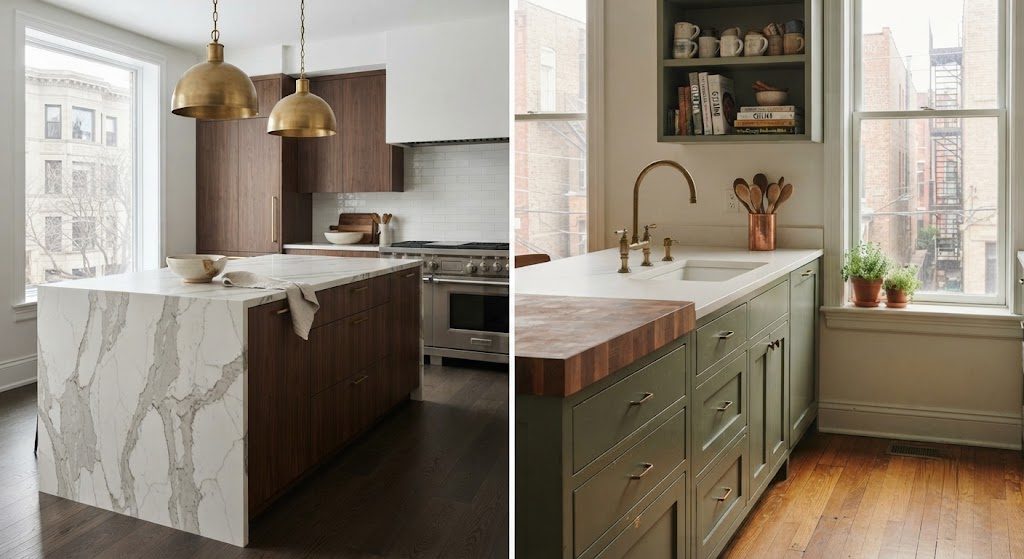
The Lincoln Park client wanted drama. A waterfall island in quartz. Brass pendant lights that made a statement. A backsplash in handmade zellige tile. The kitchen looked stunning in photos. I still show it in my portfolio.
The Bucktown client wanted function. Deep drawers instead of lower cabinets. A faucet she'd touched in a showroom and couldn't stop thinking about. Under-cabinet lighting on a dimmer. A butcher block island top she could sand and refinish when it got scratched. Her kitchen looked good. Not showstopping. But she called me six months later to say she loved cooking in it every single day.
The Lincoln Park client never called. I don't think she was unhappy. I think her kitchen did exactly what she wanted it to do: look beautiful. But I've thought about those two projects a lot since then, because they represent the fundamental tension in every kitchen remodel. Are you building a kitchen to look at, or to live in?
Where the Money Went
Both kitchens had the same bones. Same cabinet count, same layout, same appliance package. Here's where they diverged.
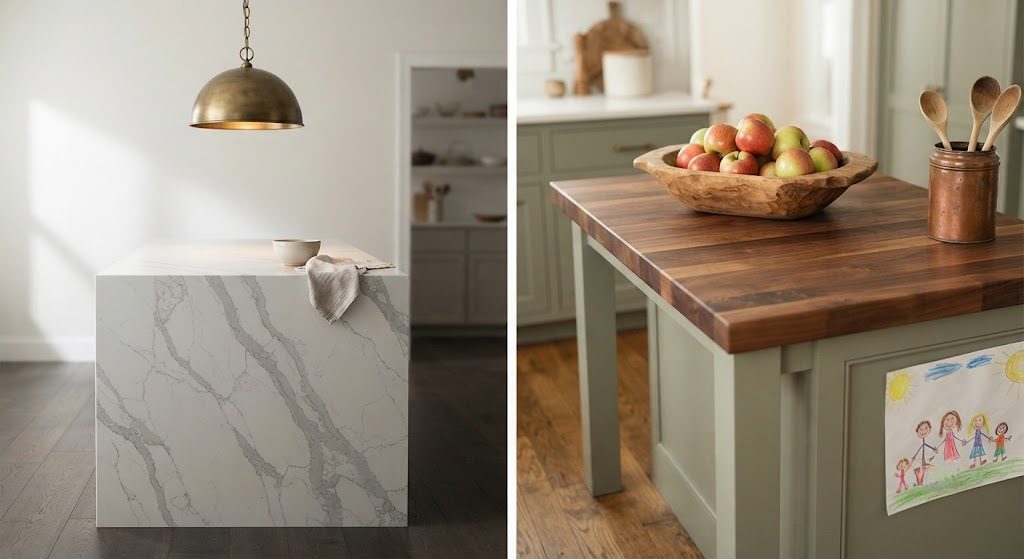
Countertops. The Lincoln Park kitchen spent $8,200 on quartz with a waterfall island edge — the slab runs vertically down the sides of the island to the floor. The material itself was similar quality to the Bucktown kitchen's quartz. The difference was entirely in the waterfall fabrication and the extra slab material it required. The Bucktown kitchen spent $4,800 on standard quartz with a simple eased edge. The remaining $3,400 went elsewhere.
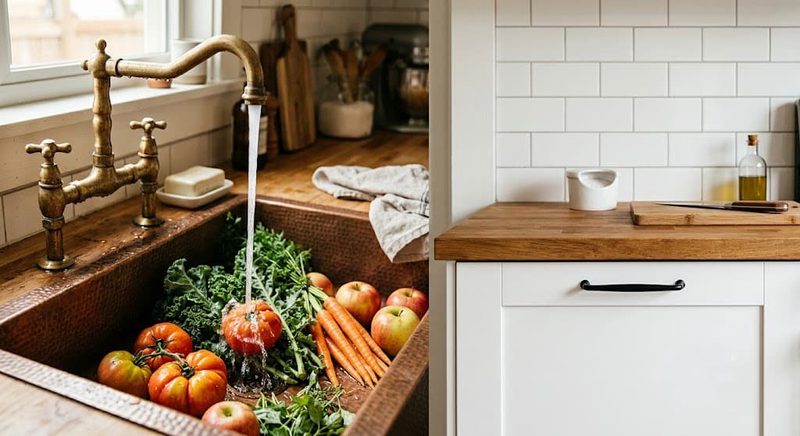
Backsplash. Lincoln Park went with handmade zellige tile at $22 per square foot. Gorgeous, irregular, shimmering in the under-cabinet light. Total cost: $1,800 including installation. Bucktown went with standard white subway tile at $3 per square foot. Total cost: $450. The difference: $1,350.
Island. Lincoln Park's waterfall island was the star of the kitchen. Bucktown's island had a butcher block top — warm under the elbows, replaceable if it got damaged, a fraction of the cost. The butcher block top was $600. The quartz on the perimeter counters was where the money stayed.
Cabinetry. Here's where Bucktown spent more. She put $2,200 into deep drawer bases instead of standard lower cabinets with shelves. Every pot, pan, and small appliance had a pull-out home. Lincoln Park had beautiful cabinet fronts — slab doors in a warm white — but standard shelf interiors. The drawers in Lincoln Park were the minimum: one stack next to the range, everything else behind doors.
Faucet and hardware. Bucktown spent $260 on a Delta faucet and $350 on cabinet pulls. Lincoln Park spent $120 on a faucet and $180 on pulls that looked similar but were lighter, thinner metal. The Bucktown faucet had a magnetic docking spray head and a finish that resisted water spots. The pulls were solid zinc, smooth under the fingers. These are the things you touch every day. Bucktown touched quality. Lincoln Park touched compromise.
What Each Client Got Right
The Lincoln Park client wanted a kitchen that impressed people. Her kitchen impressed people. The waterfall island was the first thing anyone mentioned when they walked in. The zellige tile caught the light and made the whole room glow. She got exactly what she paid for.
The Bucktown client wanted a kitchen that worked. Her drawers glided open with one finger. Her faucet didn't spot up. Her butcher block island had knife marks within a month and she didn't care because that was the point. She got exactly what she paid for too.
Neither kitchen was wrong. But if I had to cook dinner in one of them every night for the next ten years, I'd pick Bucktown.
The Trade-Offs That Aren't Visible
In before-and-after photos, the Lincoln Park kitchen looks more expensive. The waterfall island photographs like a luxury hotel. The Bucktown kitchen looks nice but unremarkable — white cabinets, subway tile, a wooden island top. Nothing you haven't seen before.
What you can't see in the photos: the Bucktown client can pull out a drawer and see every pot she owns. She can rinse the faucet spray head and it docks itself back into place magnetically. She can dim the under-cabinet lights for a softer glow after dinner. Her five-year-old can reach the snack bin on the bottom pantry shelf.
The Lincoln Park client has a kitchen that photographs beautifully. The Bucktown client has a kitchen that works beautifully. They're not the same thing.
What I'd Do With $45,000 Today
If I were spending that budget on my own kitchen tomorrow, here's where the money would go.
Countertops would get standard quartz with a simple edge. No waterfall. The savings would buy deep drawer bases in every lower cabinet. The backsplash would be white subway tile — $3 per square foot, timeless, scrubbable. The faucet would be the Delta Leland I've recommended forty times. The cabinet hardware would be solid zinc, not hollow. The lighting would be layered — under-cabinet, pendant, and a small lamp on the counter. The island would be butcher block, because I have a five-year-old who bangs spoons on surfaces and I want a counter I can sand down in five years and make look new again.
This kitchen would not go viral on Instagram. It would not be featured in a design magazine. It would cook beautifully, clean up easily, and feel good to stand in at 6 PM on a Tuesday while Henry arranges broccoli on a sheet pan.
That's the kitchen I want. The Bucktown client already has it.
A great kitchen doesn't happen by accident. It happens by how you live in it.
No comments yet — be the first to share a thought.