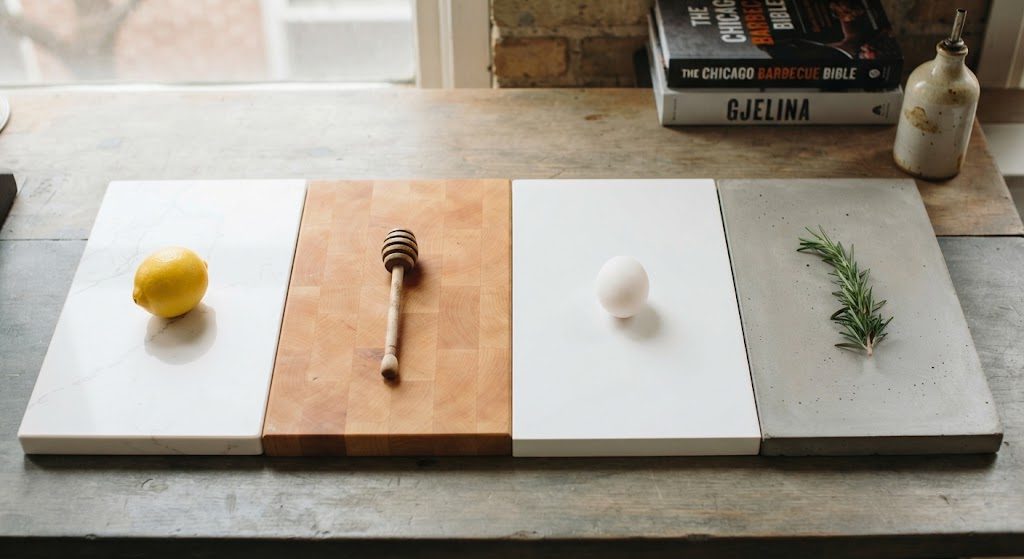
The most expensive countertop I ever specified for a client was a slab of Calacatta marble that cost $12,000 before fabrication. It was stunning. The client was thrilled. A year later, she called me to ask if it was normal for her countertop to have a faint red ring from a wine glass she'd set down during a party.
It was. That's what marble does. She hadn't known, and I should have warned her more clearly.
Countertops are the surface you touch more than any other in your kitchen. They take hot pans, wine spills, lemon juice, flour, coffee grounds, and the occasional drop of a cast iron skillet. Choosing one based on how it looks in a showroom is a mistake I've watched too many people make. Here's what four popular materials actually cost and how they hold up in a real kitchen.
Quartz
Quartz is engineered stone — crushed quartz mixed with resin and pigment. It's the most popular countertop material in the kitchens I designed, and for good reason.
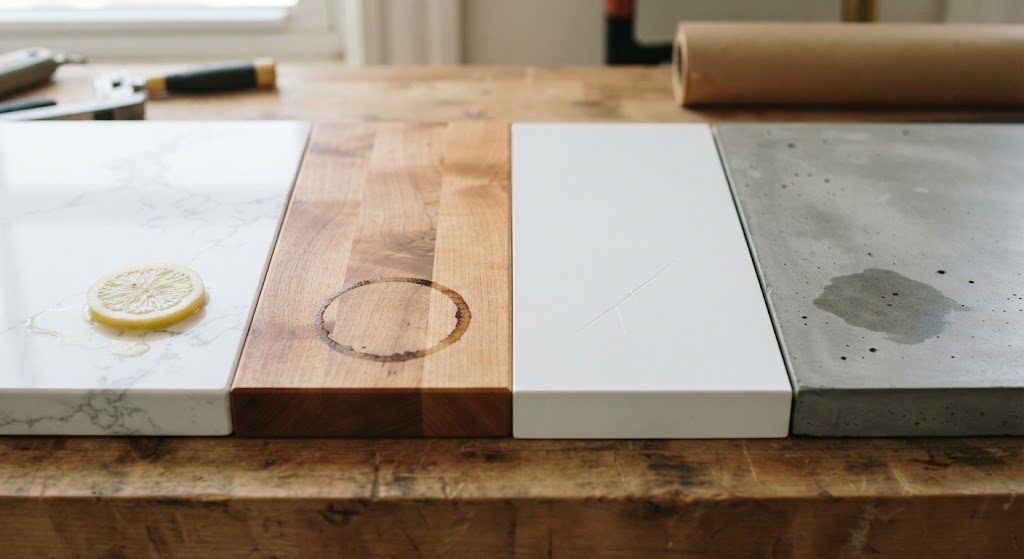
Quartz is non-porous. It doesn't need sealing. It resists stains, scratches, and heat up to a point — don't set a hot cast iron pan directly on it, but a warm plate won't leave a mark. It cleans with soap and water. It comes in a range of colors and patterns, including convincing marble look-alikes that won't etch from lemon juice.
Cost: $50 to $120 per square foot installed. A typical kitchen with 30 square feet of countertop runs $1,500 to $3,600.
The trade-off: Quartz can discolor or warp under extreme heat. A pan from a 450-degree oven, set directly on the surface, can leave a scorch mark or cause the resin to yellow. Use trivets. Also, seams are visible on larger runs — a good fabricator makes them subtle, but they're there.
Best for: Families who cook daily and don't want to think about maintenance.
Butcher Block
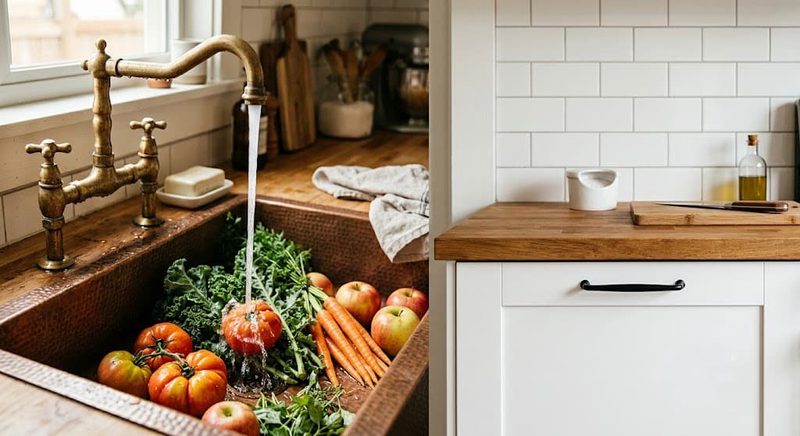
Butcher block is wood — usually maple, walnut, or oak — glued together in strips. It's warm under your hands, quieter than stone when you set down a plate, and it makes a kitchen feel like a kitchen.
Butcher block can be sanded and refinished. A stain that would ruin quartz permanently can be sanded out of wood. The surface develops a patina over time that I find genuinely beautiful — knife marks, slight variations in color, the evidence of a kitchen that's been cooked in.
Cost: $30 to $80 per square foot installed. A 30-square-foot kitchen runs $900 to $2,400. IKEA's solid wood butcher block is at the low end and is surprisingly good for the price.
The trade-off: Butcher block requires maintenance. It needs to be oiled regularly with food-grade mineral oil. Standing water around the sink will darken the wood and eventually cause rot if not wiped up. It dents and scratches. If you're the kind of person who will be bothered by knife marks, this is not your material. Butcher block is also not heat-resistant — hot pans leave scorch marks that you can sand out, but you have to actually sand them out.
Best for: People who want warmth and are willing to maintain it, or who want to save money on one section of counter — like an island — while using stone on the main run.
Laminate
Laminate is the budget option, and it has a reputation problem. People remember their grandmother's peeling, burnt-orange countertops with the dark seam along the edge. Modern laminate is different. It comes in colors and patterns that convincingly mimic stone, wood, and concrete. The edges are tighter. The surface is seamless.
Laminate is the cheapest countertop material that's still fully functional. It's easy to clean, resistant to stains, and light enough that you can install it on IKEA cabinets without reinforcement.
Cost: $10 to $30 per square foot installed. A 30-square-foot kitchen runs $300 to $900.
The trade-off: Laminate is not heat-resistant at all. A hot pan will melt it. It scratches and cannot be repaired — once the surface layer is damaged, you're replacing the whole section. Seams can be visible depending on the color and pattern. Water can seep into seams around the sink if they're not properly sealed, causing the substrate to swell. This is the material to choose when budget is the primary constraint, not when you're looking for a forever countertop.
Best for: Rental kitchens, first-time homebuyers saving for a future remodel, or anyone who needs a functional kitchen now and can't spend on stone.
Concrete
Concrete countertops are custom-cast to fit your kitchen. No seams. Any color, any shape, any edge profile. They're the most customizable option and the one that generates the strongest opinions. I've had clients who loved their concrete counters like a member of the family, and one who asked me to help her replace them within two years.
Concrete is heavy. Your cabinets need to be reinforced to hold it. It's porous, so it needs to be sealed regularly — unsealed concrete will absorb red wine, olive oil, and tomato sauce and hold onto the stains forever. Even sealed, concrete develops a patina. Some people love this. Some people find it stressful.
Cost: $65 to $135 per square foot installed. A 30-square-foot kitchen runs $1,950 to $4,050.
The trade-off: Concrete cracks. Small hairline cracks are normal and expected; they're part of the material's character. Larger cracks can be structural. The sealing schedule is not optional — every one to three years, depending on use. Concrete is also cold and hard under your hands, which sounds obvious, but living with it is different from tapping a sample in a showroom.
Best for: People who love the look and understand the maintenance, or who are doing a modern or industrial kitchen where the material is central to the design.
What I Recommend
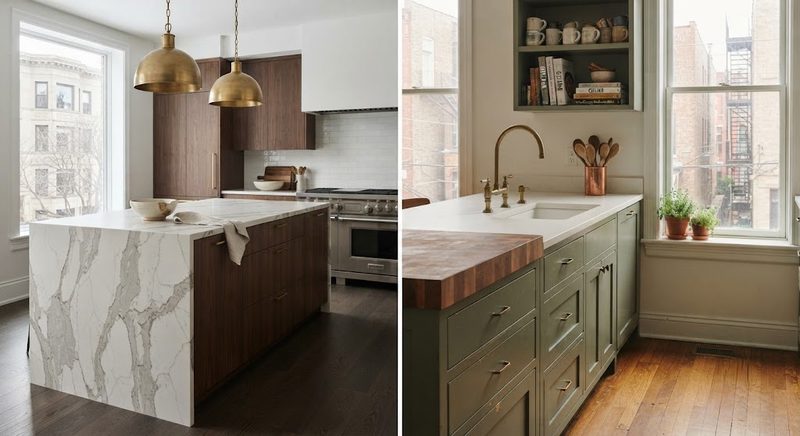
For most clients, quartz was my default recommendation. It's the countertop equivalent of a Honda Accord — not the most exciting choice, but it works, it lasts, and you don't think about it. Butcher block on an island with quartz everywhere else was my favorite combination: warmth where you sit and durability where you cook.
Laminate is the right choice when the budget dictates it. A $300 laminate countertop that lets you afford a better faucet and a drawer base cabinet instead of lower shelves is a smart trade-off. I've made that call for clients who were stretching every dollar. None of them regretted it.
Concrete I recommended sparingly, only to people who loved the material and understood what they were signing up for. It's not a countertop for someone who wants things to stay perfect.
Your countertop is going to take a beating. Choose the one whose beating you can live with.
A great kitchen doesn't happen by accident. It happens by how you live in it.
No comments yet — be the first to share a thought.