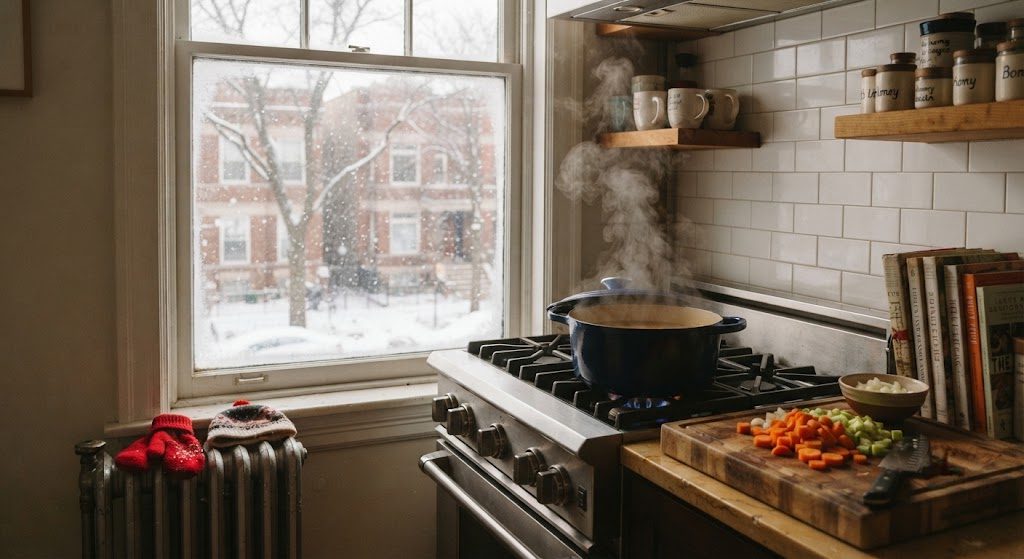
The first winter I lived in Chicago, I was not prepared. I had a coat that wasn't warm enough and a kitchen that wasn't right for the season. By February, I was ordering too much takeout and cooking nothing. The kitchen felt cold. I felt cold. The whole city was grey and frozen and I hadn't figured out how to cook my way through it.
That was twelve years ago. Now I know: you don't fight Chicago winter. You put a Dutch oven on the stove in November and it lives there until April.
The Pot That Doesn't Leave the Stove
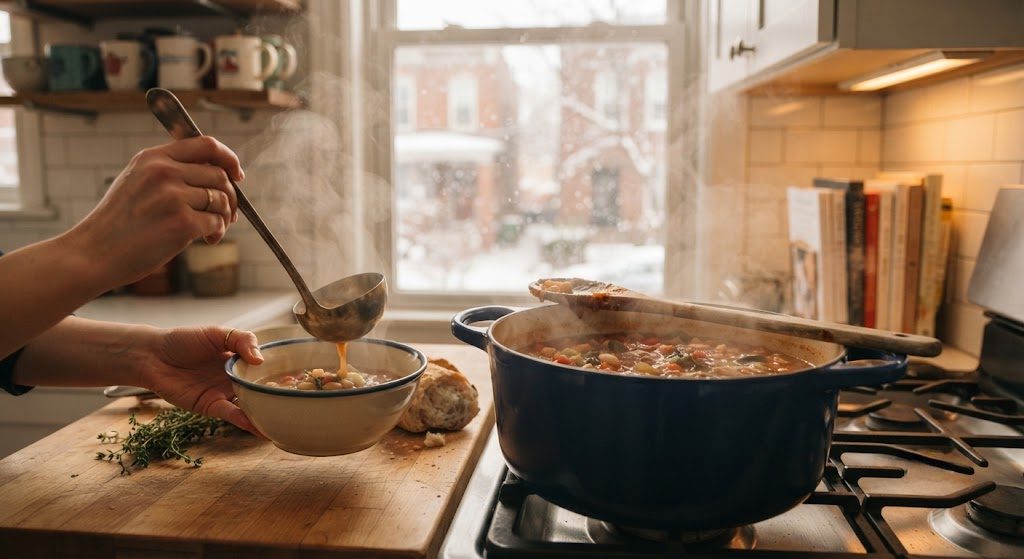
My Dutch oven is a Lodge enameled cast iron, 6 quarts, red. I bought it on sale for $45 six years ago. It has a chip in the rim from when Henry dropped a spoon into it from too high. The lid handle is slightly loose. The bottom is stained from years of beef stew and lentil soup and the time I burned chili on Super Bowl Sunday and had to scrub it with baking soda for an hour.
It's the most important pot in my kitchen from November to April. Every Saturday morning, after pancakes with Henry, I pull vegetables from the fridge — whatever's left from the week, whatever needs using. Carrots, celery, onion, garlic. Sometimes a parsnip or a turnip if the winter farmers market had them. Everything gets chopped and tossed into the pot with olive oil and salt, sweating down while Henry draws at the island and Jack shovels the walk.
The house fills with the smell of onions cooking. The kitchen is the warmest room. Snow falls outside. The pot simmers.
The Formula
Winter soup is not a recipe. It's a formula.
Start with onion, carrot, celery. Cook them slowly in olive oil or butter until the kitchen smells good enough that someone walks in and asks what's for dinner. Add garlic. Add broth — chicken, vegetable, whatever I've got. Add something hearty: lentils, beans, barley, cubed potatoes, torn kale. Add a protein if there is one: shredded chicken from last night's roast, sausage from the freezer, chickpeas from a can.
Then you let it simmer. That's the part that took me years to learn. Soup is not fast. Soup is not Tuesday night at 5:45 PM with no plan. Soup is Saturday afternoon, simmering while you do other things. The broth deepens. The vegetables soften. The whole thing becomes more than the sum of its parts sometime around hour two.
Winter soup is the easiest family dinner: a formula of aromatics, broth, something hearty, and time. A Dutch oven on the stove all weekend means dinner is ready when you are.
What Henry Eats
Henry is five. He is suspicious of most vegetables in their natural form. Carrots on a plate are met with negotiation. Carrots in soup are eaten without comment. Cauliflower roasted on a sheet pan is "too crunchy." Cauliflower that's been simmering in chicken broth for an hour is soft and mild and disappears into the spoon.
This is not a parenting trick I planned. It's just what happens when vegetables cook in broth long enough. They stop tasting like vegetables and start tasting like soup.
His favorite is a chicken and noodle soup with wide egg noodles and carrots cut into rounds. He calls the carrots "soup coins." He eats three bowls of it and asks for more. I don't tell him the soup coins are the same vegetable he refused on his dinner plate three days earlier. Some things a mother keeps to herself.
The Winter Pantry
By January, the community garden is frozen solid. The rosemary I brought inside in October is hanging on in a pot on the windowsill, but just barely. Fresh produce is whatever the grocery store has, which in Chicago in February is not much.
So the winter pantry is dried goods and root vegetables. Lentils. Split peas. Canned tomatoes from the summer garden, crushed and jarred in August when the counter was covered in red. Potatoes and onions and garlic in a basket on the floor of the pantry. Squash from the fall farmers market, still holding on. These are the building blocks.
There's a rhythm to it. Saturday: something meaty and long-simmering, a stew or a braise. Sunday: a bean soup or a lentil soup, the leftovers of which become Monday's lunch. Wednesday: something quick with broth and noodles and the last of the shredded chicken. The Dutch oven never fully cools before it's filled again.
What Soup Taught Me
I used to think winter cooking was about endurance. Getting through it. Surviving until spring.
It's not. Winter cooking is the slowest, easiest cooking I do all year. There's no garden to tend, no farmers market to rush to, no tomatoes demanding to be canned before they turn. There's just a pot on the stove and snow outside and a family that comes into the warm kitchen and asks what smells good.
The kitchen in winter is the best version of itself. It's not performing. It's not trying to impress anyone. It's just feeding the people who live here, one pot of soup at a time.
A great kitchen doesn't happen by accident. It happens by how you live in it.
No comments yet — be the first to share a thought.