Last Tuesday, Henry opened the lowest drawer while I was carrying a pot of pasta to the sink. Out came a wooden spoon, three measuring cups, and one mysterious Lego wheel. Nothing broke, but I was reminded why cabinet drawers matter more than a perfectly styled backsplash. The right cabinet drawers let you see what you own, reach the back without kneeling, and clean up quickly after real family dinners.
After designing roughly 60 kitchens, I have learned that storage usually fails in small, predictable ways. A drawer is too shallow for a utensil tray, too wide for heavy dishes, or fitted with slides that feel fine in a showroom and tired after a year of daily use. A great kitchen does not happen by accident. It happens by how you live in it.
Start with the job, not the appearance
Before choosing fronts or finishes, decide what each drawer needs to hold. A 3-inch drawer works well for flatware, peelers, kitchen scissors, and those little clips that otherwise migrate across the counter. A 6-inch drawer handles spatulas, whisks, food thermometers, and serving utensils. Deep cabinet drawers, usually 8 to 12 inches tall, are better for pots, mixing bowls, appliances, and pantry staples.
Measure the objects you already use. My 10-inch Dutch oven needs a drawer with enough interior height to clear its lid, while Henry's plastic plates need only 4 inches. If you design around an imaginary lifestyle, the storage can look elegant and still annoy you every morning. Take photographs of crowded cabinets before meeting your designer or cabinet supplier. Those pictures reveal your habits better than a showroom conversation.
Width matters too. Drawers around 18 to 24 inches wide are easy to organize and relatively forgiving with heavy cookware. A 36-inch drawer can hold a surprising amount, but it needs strong hardware and careful loading. Put the heaviest items near the bottom and avoid treating one enormous box as a substitute for several purposeful storage zones.
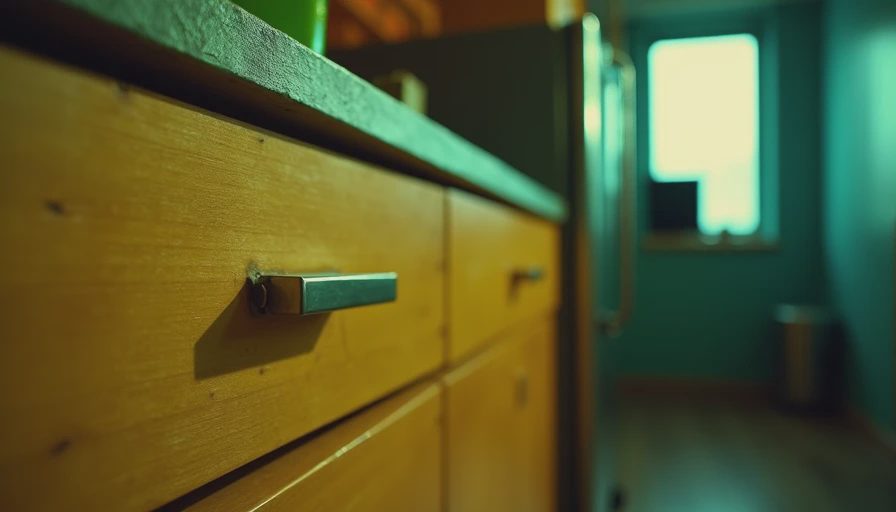
Choose slides that will survive Tuesday night
The drawer box is only half the decision. Slides determine how smoothly storage opens, how much weight it carries, and whether you can reach the back. Full-extension slides pull the entire drawer forward, exposing the last jar of rice or the missing cake pan. Partial-extension slides leave some contents hidden, which is rarely helpful in a busy kitchen.
Soft-close hardware is worth considering, particularly for cabinet drawers used by children. It slows the final few inches instead of allowing a hard slam. Quality undermount slides create a clean appearance beneath the drawer, while side-mount slides are often easier to service and can be less expensive. Ask for the hardware brand and weight rating before signing off on a quote. A drawer carrying cast iron needs substantially more support than one holding napkins.
A useful test is to open a sample drawer with one hand, then close it gently while holding a grocery bag. If it twists, catches, or requires a shove, do not assume installation will magically fix the problem. Ask to see the same hardware loaded with approximately 50 pounds. Cabinet drawers should feel stable at the back of their travel, not just impressive during the first two inches.
Match drawer sizes to kitchen zones
Place everyday cabinet drawers between the dishwasher and the main prep area. That arrangement lets you unload forks, plates, and glasses without crossing the room. In my kitchen, the flatware drawer is 24 inches from the dishwasher, while cutting boards sit vertically in a nearby 9-inch pullout. The layout saves seconds, but those seconds add up during a weeknight dinner.
Under the cooktop, use medium-deep drawers for pans and lids rather than building a cabinet with one awkward door. Keep potholders and wooden spoons within one step of the range, but do not store delicate plastic beside a hot oven wall. A narrow drawer beside the refrigerator can hold food wraps, sandwich bags, and the marker I use to label freezer containers.
Near a coffee station, a 4-inch drawer can organize filters, tea bags, and small scoops. Near a baking area, wider cabinet drawers are useful for flour, parchment, cooling racks, and measuring tools. The best layout follows movement: refrigerator to prep, prep to cook, cook to serving. The old work triangle is less important than avoiding unnecessary backtracking.

Think about drawer boxes and interiors
Solid wood drawer boxes are attractive and repairable, but high-quality plywood can also provide dependable performance at a different price point. Look for sturdy joinery, a flat bottom, and an interior surface that can handle a damp cloth. A drawer bottom that flexes under a stack of plates is a warning sign, regardless of how lovely the exterior appears.
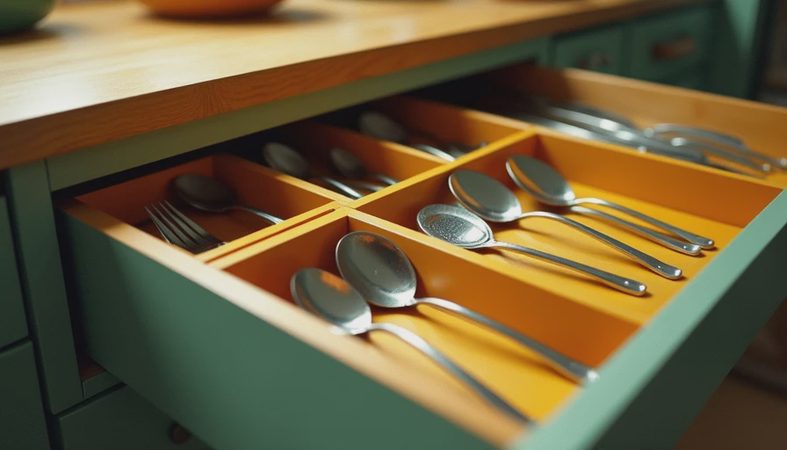
Do not fill every cabinet drawers space with fixed organizers before living with it. Removable bamboo dividers, such as those from Rev-A-Shelf or simple $12 to $20 adjustable trays, let you change the arrangement. I once specified a beautifully fitted knife insert for a client who later bought a larger chef knife. The expensive insert became a limitation. Flexible storage would have solved the problem in five minutes.
For plates, a peg system can work better than stacking them in a deep drawer, especially for households with children. For spices, shallow cabinet drawers are convenient only when labels face forward. For trash and recycling, ventilation, cleaning access, and a strong bottom matter more than decorative trim. Expect spills, because someone will eventually put a wet compost container back too soon.
Budget for the details that affect daily use
Cabinet drawers can add cost compared with basic doors, but the value is clearest in lower cabinets. A small kitchen might spend several hundred dollars more on upgraded drawer hardware, while a full remodel can add several thousand depending on cabinet construction and the number of openings. I would rather put money into full-extension slides and strong drawer boxes than into a decorative end panel nobody touches.
Stock and semi-custom lines often offer useful drawer configurations without the price of fully custom cabinetry. IKEA systems can be practical when paired with careful planning and upgraded interior organization. Local cabinetmakers can create unusual widths or specialized storage when a kitchen has a chimney, narrow wall, or awkward corner. The right choice depends on the room, not on a prestige label.
Get the quote broken into cabinet boxes, fronts, hardware, installation, and accessories. That makes it easier to compare two proposals honestly. A $4,000 difference may reflect better slides and more functional openings, or it may mostly reflect finish upgrades. Ask the supplier to identify exactly where the extra money goes.
A simple planning check before ordering
Walk through the kitchen with a tape measure and write down five zones: prep, cooking, cleanup, breakfast, and pantry. For each zone, list the objects used there at least three times a week. Then assign a drawer height and width based on those objects, leaving enough clearance for handles, plumbing, and nearby appliances.
Open every existing cabinet and note the frustrations. If you cannot reach the back of a 24-inch cabinet, replace that problem with a full-extension drawer rather than repeating it. If a drawer would collide with the dishwasher door, reduce its width or shift the opening. Confirm finished dimensions after accounting for drawer fronts; a 30-inch cabinet opening does not always produce a 30-inch interior.
Finally, request a hardware sample or visit a showroom with a heavy pan in your hands. Test the motion, listen for racking, and inspect the closed gaps from several angles. A five-minute test can prevent a decade of daily irritation.
The takeaway for this week
You do not need to remodel immediately to improve cabinet drawers. Measure the three storage areas that frustrate you most, remove expired items, and add one adjustable organizer. If a renovation is ahead, photograph those areas and bring the evidence to your designer. Specify full extension where access matters, reserve deep drawers for genuinely bulky items, and spend on hardware before decorative extras.
The prettiest kitchen is not necessarily the easiest one to cook in. Good cabinet drawers make room for the pancake batter, the cast iron, the snack stash, and the occasional Lego wheel. That practical generosity is what makes a kitchen feel finished.



No comments yet — be the first to share a thought.