Last Tuesday, Henry opened the cabinet under the sink looking for his step stool and pulled out a rain of recycling bags, dishwasher tablets, and one wooden spoon I had not seen since November. Nothing was technically broken. The cabinet was simply doing too many jobs at once. The right kitchen cabinet organizers can turn that kind of daily excavation into a one-handed reach, without requiring a full remodel or a showroom-perfect kitchen.
I have specified storage for roughly 60 kitchen projects, from custom walnut cabinetry to budget-friendly flat-pack renovations. The same lesson appears in both: storage works when it follows your habits. A narrow drawer beside the cooktop should hold cooking tools, not serving platters. A deep corner cabinet needs a plan, not optimism. Before buying anything, watch what you reach for during three ordinary meals and organize around that evidence.
Start With the Cabinet, Not the Product
The most common mistake with kitchen cabinet organizers is shopping first and measuring later. Grab a tape measure and record the opening width, interior depth, and clear height. Measure at the front and back because hinges, plumbing, and uneven walls can steal an inch. A 12-inch-wide cabinet opening may have only 10 1/2 inches of usable interior space once the frame is considered.
Also note how the door works. A full-overlay door, where the panel covers most of the cabinet frame, can limit the swing of a pull-out shelf. Hinges may need 1 1/2 to 2 inches of clearance. For drawers, check whether the box can accept side-mount or undermount slides. A $30 organizer that fits poorly becomes a $30 reminder to measure twice.
Think about weight, too. A pot rack holding three cast-iron pans needs stronger hardware than a small bin for snack bars. Look for stated weight capacity and solid mounting points rather than relying on adhesive alone. One of my favorite kitchen cabinet organizers is not glamorous: a simple, 10-inch-wide pull-out beside the range that keeps oils upright and visible.

The Best Solutions for Pots, Pans, and Lids
Deep lower cabinets are excellent at hiding cookware and terrible at helping you find it. A vertical pan divider is usually more useful than a stack of nested pans. Look for adjustable steel-coated dividers with a base that does not slide when you lift a skillet. Dividers spaced 3 to 4 inches apart can separate sauté pans, baking sheets, cutting boards, and cooling racks.
Lid storage deserves its own decision. A rack mounted to the inside of a cabinet door works well when the door has enough clearance, while a horizontal lid holder in a drawer is quieter and easier for children to use. I like the Rev-A-Shelf style of pull-out systems for larger remodels because they use the cabinet depth efficiently, but a $15 freestanding divider can solve the same problem in a rental.
For heavy Dutch ovens, avoid high shelves that require two hands and a balancing act. Store the pot at waist height, with its lid nearby or turned upside down inside the vessel. This small change protects your wrists and prevents the familiar clatter that makes everyone in the house think dinner has gone wrong.
Make Lower Cabinets Work Harder
Lower cabinets are where kitchen cabinet organizers can make the biggest difference because they convert deep, dark space into accessible space. A two-tier pull-out shelf is useful for canned goods, mixing bowls, and small appliances. The upper shelf should be removable or adjustable so a tall blender base does not become trapped underneath it.
For a blind corner, compare a kidney-shaped rotating shelf with a swing-out mechanism. Rotating shelves are often less expensive, sometimes around $200 to $500 installed, and work well for lightweight cookware. Swing-out units can bring more of the contents completely outside the cabinet, but they cost more and need careful installation. Neither option magically creates storage; both simply make existing space reachable.
Under the sink, choose a U-shaped shelf or a two-level sliding unit that works around the drainpipe. Put daily items such as dish soap and sponges at the front, and reserve the back for refill bottles. Leak sensors, trash bags, and cleaning cloths deserve a separate bin. Keeping chemicals in a latched container is especially sensible when a curious five-year-old is helping unload groceries.
Drawers, Spices, and the Small Things
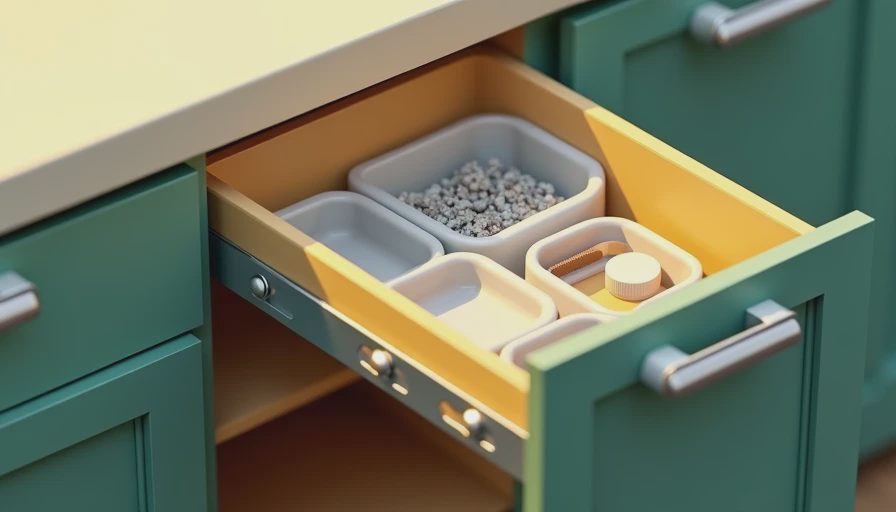
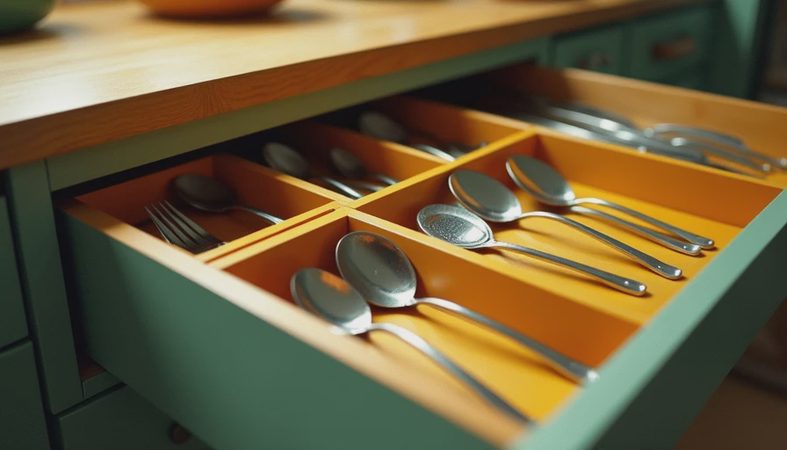
Drawers reward restraint. Kitchen cabinet organizers should divide categories without creating a maze of tiny compartments. A 3-inch drawer near the prep area can hold peelers, thermometers, measuring spoons, and the $17 OXO peeler I reach for more often than expensive specialty tools. Use shallow trays that can be lifted out and washed instead of permanently gluing every item into position.
Spices need visibility. A tiered shelf lets you read labels from above, while a narrow pull-out beside the range keeps bottles in one line. Do not store spices directly over a hot burner; heat and steam shorten their useful life. For baking ingredients, clear rectangular containers make it easy to see when flour or brown sugar is running low, but leave the original label nearby if allergy information matters in your household.
Snack storage works best when it reflects real portions. We use one open bin for Henry's school snacks and another for items that need an adult. That simple boundary prevents the daily negotiation over cookies and keeps the kitchen from becoming a scavenger hunt.
What to Buy and What to Skip
The best kitchen cabinet organizers are not necessarily the most expensive. Spend more on moving hardware, including full-extension slides, soft-close runners, and sturdy corner mechanisms. Those parts carry weight and absorb repeated use. Save on simple bins, shelf risers, and dividers that can be replaced without changing the cabinet.
Brands such as Rev-A-Shelf, Hafele, IKEA, Container Store, and simple home-center lines offer different price points and installation styles. I would compare the dimensions, weight rating, mounting method, and return policy before comparing logos. A $400 pull-out that fits perfectly can be a better value than a $90 system that blocks the door or wastes 4 inches of depth.
Avoid buying a complete matching set just because the photos look tidy. Kitchens rarely have identical cabinets, and a collection of containers can create its own clutter. Buy one unit, live with it for a week, and then expand only when the pattern is clear. That is how kitchen cabinet organizers become useful infrastructure instead of abandoned project supplies.
A One-Weekend Organization Plan
Start by emptying one cabinet completely. Wipe the shelf, discard expired food, and group the remaining items by how often you use them. Measure before ordering anything. During the first pass, keep daily tools between knee and shoulder height, occasional tools higher or farther back, and heavy cookware low but easy to slide out.
On Saturday morning, install one high-impact solution: a pan divider, drawer tray, or pull-out shelf. Test it with the actual dishes and pans you own, not the ideal collection you hope to own someday. On Sunday, label only broad categories such as baking, lunch, or cleaning. Over-labeling makes a kitchen feel like a warehouse and slows everyone down.
A great kitchen doesn't happen by accident. It happens by how you live in it. If you measure carefully, prioritize reachability, and spend money on hardware that carries real weight, your cabinets can support weeknight cooking instead of fighting it. This week, choose the cabinet that causes the most frustration, measure its usable space, and make one practical change. That small fix is often the beginning of a much calmer kitchen.


No comments yet — be the first to share a thought.