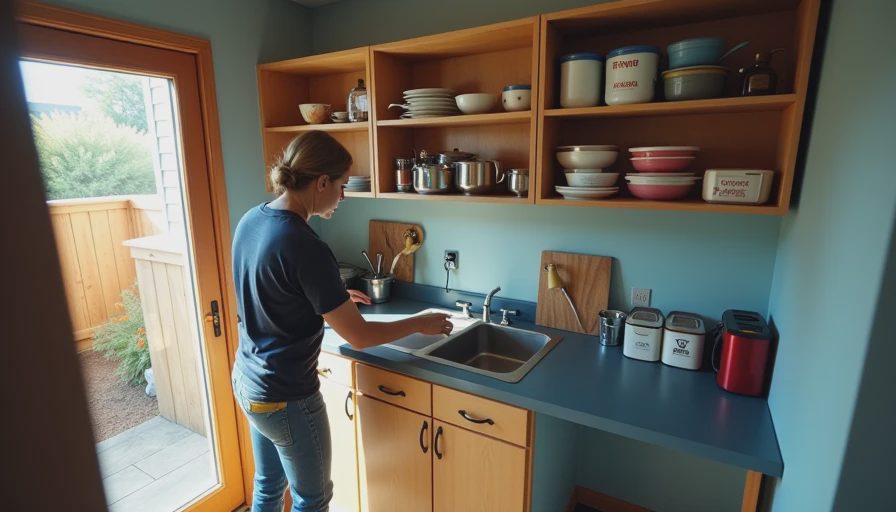
At 6:15 on a Tuesday, I opened the cabinet under our kitchen sink and a roll of trash bags, two spray bottles, and Henry's step stool came tumbling out. Nothing was technically missing, but nothing was easy to reach either. That is the real problem storage for cabinet solutions should solve: not simply adding capacity, but making everyday things visible and accessible. A great kitchen doesn't happen by accident. It happens by how you live in it.
Start by measuring the cabinet you actually have
Before buying a clever organizer, measure the cabinet opening, interior width, depth, and height. Write down the location of hinges, plumbing, shelves, and drawer boxes. A base cabinet advertised as 24 inches wide may have an opening closer to 21 inches, while a sink cabinet can lose 6 to 10 inches of usable depth around pipes.
For storage for cabinet planning, also note what you reach for most. Heavy Dutch ovens need sturdy, low storage. Spices need shallow shelves near the range. Baking sheets need vertical dividers rather than a pile that collapses whenever you remove the bottom pan. Photograph each cabinet before shopping; it is much easier to compare a product's dimensions with a phone image than with a vague memory of “that cabinet beside the refrigerator.”
Material matters, too. Powder-coated steel handles steam and damp cleaning cloths better than unfinished particleboard. Solid wood pegs look lovely but can swell if they live beside a sink. A $25 organizer that fits precisely is more useful than a $70 product that leaves four inches of dead space and blocks the door.
Pull-outs turn deep cabinets into usable space
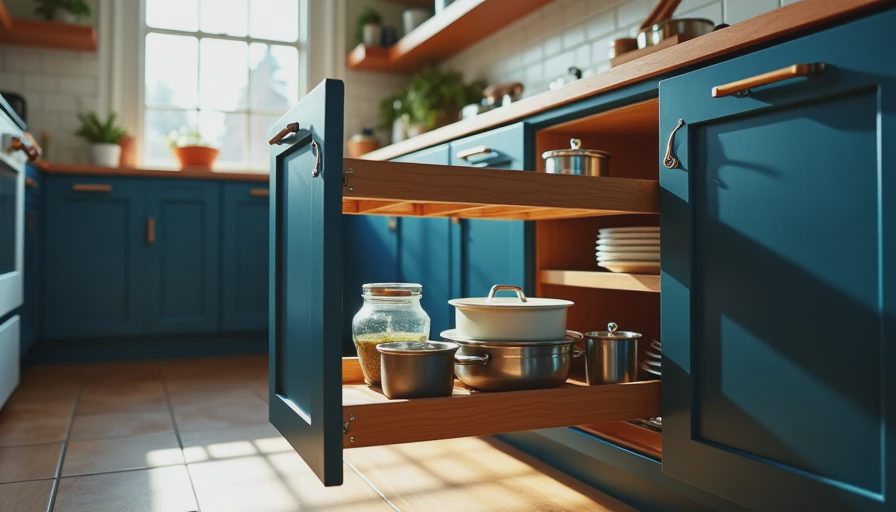
Deep base cabinets are where good intentions go to disappear. Canned tomatoes migrate to the back, mixing bowls stack too high, and the jar of tahini becomes an archaeological find. A full-extension pull-out shelf brings the contents forward, so you can see everything without kneeling on the floor.
For storage for cabinet upgrades, look for a load rating of at least 50 pounds for cookware and adjustable shelves for bottles or food containers. Rev-A-Shelf, Häfele, and IKEA all offer different approaches, from narrow 6-inch fillers to wider two-tier baskets. Prices commonly range from about $60 for a simple slide-out tray to $300 or more for a fitted double-basket system.
A narrow pull-out beside the range is especially useful for oils, vinegars, and cooking sprays. Keep the shelves tall enough for a standard 25-ounce bottle, but avoid storing heat-sensitive ingredients directly beside the oven. For pots, one sturdy shelf is often better than two flimsy baskets. I learned that after a rack bent under my cast-iron skillet collection and made a sound like a small earthquake.
Make drawers work harder
A wide drawer can hold far more than utensils if it has a plan. Use a peg system for plates and bowls, adjustable dividers for food containers, and a shallow tray for measuring spoons. The OXO expandable utensil organizer is a useful starting point for many drawers, while custom maple inserts provide a more built-in appearance at a higher price.
The best storage for cabinet drawer setup separates categories by motion. Daily tools should sit near the dishwasher or prep area. Knives belong in a dedicated block or in-drawer insert, not loose beside forks. Keep lunch containers together, including their lids, so weekday packing does not become a scavenger hunt.
Leave about half an inch of clearance around dividers so the drawer opens smoothly. For a 30-inch drawer, two narrow zones often work better than one giant compartment. If Henry is helping with pancakes, I want the silicone spatula where his step stool can reach it, not hidden behind the turkey baster I use twice a year.
Use cabinet doors without creating clutter
The back of a door is valuable real estate, but only when the added weight does not strain the hinges. Slim racks are excellent for cutting boards, wraps, pot lids, and cleaning sponges. A simple over-the-door rack may cost $15 to $35, while a mounted steel organizer can cost $50 to $120.
For storage for cabinet doors, check the gap between the door and the shelf before installing anything. A rack that is only 2 inches deep can prevent an interior shelf from closing if the hinge swing is tight. Door-mounted bins are also a poor choice for heavy glass jars; use them for lightweight packets, brushes, or small plastic containers instead.
Under the sink, a two-tier caddy can separate dishwasher detergent from hand soap and microfiber cloths. Add a removable leak tray beneath everything. It costs roughly $15 and gives you an early warning when a supply line or disposal connection starts dripping. Avoid mixing cleaners in one open bin, and keep hazardous products high or secured when young children are around.
Think vertically for trays, lids, and boards
Horizontal stacks look tidy until you need the item at the bottom. Vertical dividers let baking sheets, cooling racks, cutting boards, and pot lids stand like files in a cabinet. Choose dividers with rounded edges and a stable base; wire versions are usually easier to clean, while wood versions can feel quieter and more substantial.
Good storage for cabinet interiors depends on category size. A 3-inch slot may hold a thin sheet pan, but a cast-iron lid needs more room. Measure your thickest item, then add at least half an inch so retrieval does not become a wrestling match. Keep cutting boards near the prep counter and baking trays near the oven, even if that means using two smaller organizers instead of one large one.
When remodeling, ask the cabinet designer for a vertical tray cabinet or a 9-inch filler pull-out. These details are inexpensive compared with replacing cabinets later. If you are refreshing an existing kitchen, tension dividers and adjustable racks can create nearly the same benefit without drilling into the box.
Choose upgrades that fit your budget
A sensible storage for cabinet plan does not require a full remodel. Start with the cabinet that annoys you daily, then spend in proportion to the problem. A $12 bin can fix snack packets. A $35 lazy Susan can rescue corner shelves. A $150 pull-out may be worthwhile for heavy pots you use every night, while a custom corner mechanism costing $800 deserves careful consideration.
Try a temporary test before committing. Put a cardboard box on a shelf to represent a basket, or use painter's tape to mark the footprint of a future organizer. Live with it for three days. Notice whether the door still opens fully, whether your hand can grip the handle, and whether the new arrangement creates another awkward transfer.
My favorite inexpensive change was a set of clear bins for baking supplies. At $9 each, they stopped chocolate chips and sprinkles from spreading across three shelves. The kitchen did not become larger; it became legible. That is often the more valuable improvement.
A practical cabinet reset you can do this week
Empty one cabinet completely and group its contents on the counter. Discard expired food, relocate duplicates, and place the most-used items at the front. Measure the open space, then choose one organizer that addresses a specific failure: reaching, stacking, visibility, or wasted height.
Install it without overfilling. Leave room for a hand to lift a lid and for a shelf to slide without scraping. Labeling is optional, but clear containers help busy families see when rice, flour, or snacks are running low. Reassess after a week and move anything that repeatedly ends up on the counter.
The goal is not a showroom cabinet. It is a cabinet that works when dinner is late, the dishwasher is full, and a five-year-old is asking for pancakes. Start with the one frustrating space, measure twice, and make the next reach easier.



No comments yet — be the first to share a thought.