The phrase "modern kitchen" gets thrown around in every design magazine, but the best modern kitchens aren't about passing trends. After a decade remodeling homes in Chicago, I've learned that a modern kitchen only works when it fits the way you live. On Saturday mornings my son Henry uses a step stool, and the counters still look like a restaurant at 7 a.m. That's the kind of kitchen worth building.
Start With the Work Triangle, Then Ignore It
The sink-stove-fridge triangle is a fine starting point, but it doesn't account for two people cooking together or a kid on a step stool. Instead, map the routes you'll actually use: coffee near the water, a microwave landing zone, a trash pullout next to the main prep area. These small routing decisions will make your modern kitchen feel twice as large without moving a wall.
I've seen families spend $150,000 and still bump into each other. The fix is usually wider walkways — 42 inches in work zones, 48 near an open fridge door. Measure your actual paths before you talk to a contractor. It's the difference between a kitchen that photographs well and one that works on a Wednesday night.
Pick Materials That Age Gracefully
Quartz counters are nearly bulletproof, which is why they dominate new builds. But if you're budget-minded, solid-surface options like Corian run $40 to $70 per square foot installed, versus $80 to $120 for many premium quartz. Both keep your modern kitchen looking sharp when tomato sauce hits the floor. For cabinet fronts, skip glossy lacquer. Matte thermofoil or painted wood hides the crusted pancake batter that I always forget to wipe. Open shelving only works if you can style it weekly; if not, choose upper cabinets with a few glass fronts to get the airy look without the clutter.
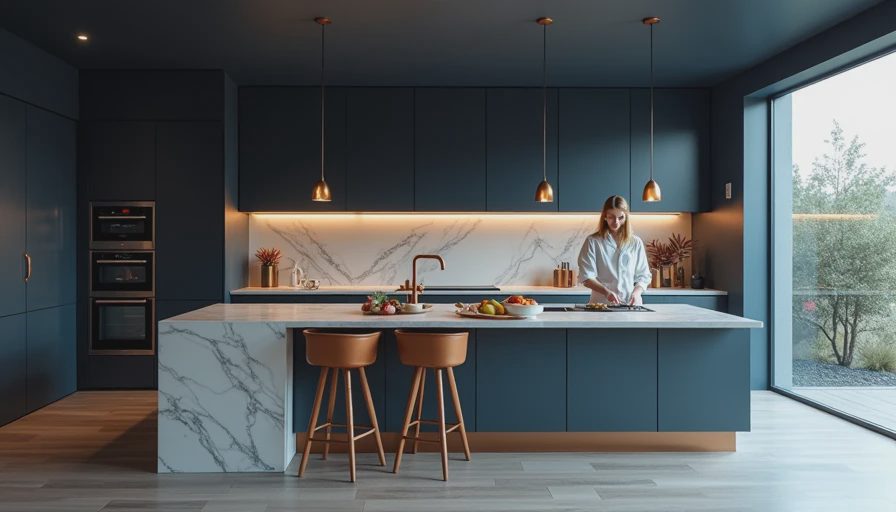
I also tell clients to think about the floors. Porcelain wood-look tile costs about $5 to $9 per square foot and survives water, dropped glass, and Chicago winters far better than real hardwood. If a dishwasher ever leaks, you won't be tearing up planks. The tile also warms up quickly under radiant heat, which feels great at 6 a.m.
Spend on What You Touch, Save on What You See
A modern kitchen budget should go first to things you grip every day. A solid brass faucet from Delta or Moen costs around $300 and works out to less than a dollar a month over a decade. Pay $3 to $6 per knob instead of $1 for plastic hardware. Where you can save: thermofoil cabinet doors look like wood from three feet away, a simple subway tile backsplash is fine, and a $150 countertop wine cooler frees up under-counter space. These trade-offs keep your modern kitchen feeling high-end where it matters.
The one thing I never suggest scrimping on is the faucet finish. PVD-coated finishes resist water spots and grease, so choose a brushed nickel or matte black finish if you don't want to polish constantly. And if you cook a lot, install a pot filler above the stove. It runs about $200 in parts plus installation, but it saves you from hauling heavy pots across the room.

Lighting Does More Than Any Cabinet Upgrade
If your modern kitchen feels flat, the problem is usually lighting. Layer ambient ceiling light, task light under the upper cabinets, and accent light inside glass fronts. Put every light on a dimmer. You'll want bright light at 6 a.m. to tell paprika from chili powder, and warm soft light at 9 p.m. while wiping counters. A professional lighting plan costs about $800 to $1,500 and changes the whole mood of the space. Pick LEDs with a color-rendering index of 90 or above so skin tones look natural.
For under-cabinet lights, look for hardwired fixtures rather than battery strips. They're more reliable and can be tied to a dimmer. A set of under-cabinet lights from Tech Lighting runs $300 to $500, but you'll use them about four times more than you think.
Make Room for the Mess
Even a beautiful modern kitchen turns into a disaster by midweek without a place for the mess. Add a landing zone for mail, a drawer for takeout menus, and a cabinet for the step stool. A pull-out waste bin and a deep utility drawer with outlets keep blenders and chargers plugged in but hidden. At our house, a $45 bamboo under-sink organizer freed up a whole shelf, and a counter rule — anything unused for two weeks goes in a cabinet — did more for the look than any renovation.
Think about the wall behind the sink too. A peel-and-stick backsplash won't hold up to constant moisture. Use an actual stainless steel backsplash sheet or a large piece of quartz cut to size; it costs $200 to $400, but you'll never scrub grout lines again.
The Takeaway
Before you choose tile or appliances, spend a week tracking how your family moves through the room. The answers will tell you more than any Pinterest board. Start with flow, pick durable materials, and invest in the things you touch. Your kitchen should work as hard as you do.



No comments yet — be the first to share a thought.