At 5:15 on a Chicago Tuesday, my kitchen usually contains one tired parent, one hungry five-year-old, and a countertop that still has pancake batter on it from breakfast. That is exactly where crockpot meals earn their keep. You add ingredients before school or work, let gentle heat do the slow cooking, and come home to dinner that smells like you planned ahead, even if you absolutely did not.
The best crockpot meals are not complicated recipes dressed up as life advice. They are practical combinations that tolerate a late pickup, a forgotten onion, or a child deciding that carrots are suddenly unacceptable. I look for meals with affordable ingredients, useful leftovers, and a texture that improves during a long afternoon. A slow cooker should serve your routine, not become another appliance demanding attention.
What makes crockpot meals work
A slow cooker cooks with steady, moist heat, which is especially useful for tougher cuts of meat, dried beans, and sturdy vegetables. Chicken thighs, chuck roast, pork shoulder, lentils, and black beans can become tender without constant stirring. The enclosed pot also reduces evaporation, so a recipe usually needs less liquid than a soup prepared on the stovetop.
The easiest formula is protein, vegetables, seasoning, and enough liquid to create steam without turning dinner into a thin stew. For a family of four, I often use 1 1/2 pounds of chicken thighs, three cups of chopped vegetables, one 14.5-ounce can of tomatoes, and about one cup of stock. That combination fills a six-quart cooker without crowding it.
Do not treat the cooker like a magical casserole dish, though. Dairy can separate during a long cook, fresh herbs lose their brightness, and pasta can become soft and swollen. Add cream, cheese, spinach, herbs, or cooked noodles near the end. That small timing adjustment makes crockpot meals taste fresher and look less beige.
Five dependable meal formulas
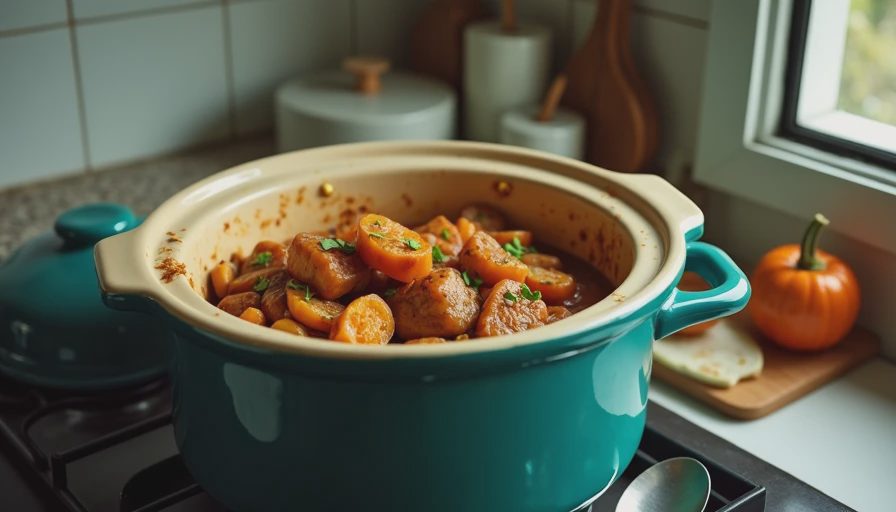
A tomato chicken dinner is my most repeated starting point. Add boneless chicken thighs, crushed tomatoes, garlic, smoked paprika, and a sliced bell pepper. Cook on low for six to seven hours, then shred the chicken and serve it over rice, polenta, or toasted bread. A $4 bag of frozen peppers works just as well as fresh produce when the crisper drawer is empty.
For beef, use a 2 1/2- to 3-pound chuck roast with onions, carrots, potatoes, beef stock, and a spoonful of tomato paste. Browning the roast first adds flavor, but skipping that step still produces a satisfying meal when time is tight. Slice leftovers for sandwiches or shred them into tacos the next day.
Vegetarian crockpot meals are just as practical. Try black beans with onions, canned tomatoes, cumin, chili powder, and vegetable stock. Use dried beans only when the package directions and your cooker are appropriate; canned beans are the simpler choice for a weeknight. Stir in corn and lime juice at the end, then serve with avocado or shredded cheddar.
A lentil curry is another reliable option. Combine brown lentils, diced sweet potatoes, canned coconut milk, vegetable stock, curry powder, and ginger. The sweet potatoes soften while the lentils thicken the sauce. Add baby spinach during the final ten minutes. It is inexpensive, freezer-friendly, and substantial enough that nobody asks what else is for dinner.
The small choices that prevent disappointing results
Start with the right size cooker. A six-quart model is flexible for four to six servings, while a three-quart cooker suits smaller households and dips. Filling the crock between one-half and two-thirds full generally gives the heat enough food to work through evenly. An overfilled pot can cook slowly in the center; an almost empty one can overcook the edges.
Keep the lid closed. Every peek releases heat and extends cooking time, which is particularly frustrating when dinner needs to be ready before soccer practice. If you need to stir, do it once near the end. Cut dense vegetables such as carrots and potatoes into similar pieces so they finish together, and put them beneath meat when possible because the bottom of the pot is hottest.
Season in layers rather than dumping in a mountain of salt at the start. Stock, canned tomatoes, and packaged sauces can already contain plenty. Taste the finished sauce, then add lemon juice, vinegar, hot sauce, or salt as needed. A $10 instant-read thermometer is useful for checking poultry and confirming that reheated leftovers are hot throughout.
A realistic Sunday-to-Friday strategy
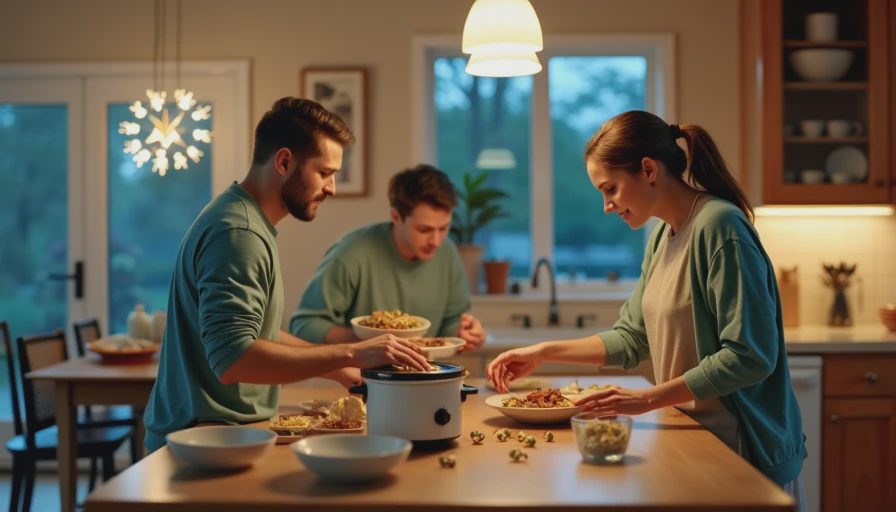
Crockpot meals become most useful when they create a plan for more than one dinner. On Sunday, make a large batch of shredded chicken with salsa, cumin, and onions. Serve it with tortillas that night, then use the leftovers for grain bowls on Monday and quesadillas on Tuesday. Store portions in shallow containers so they cool quickly, and refrigerate them within two hours.
You can also prep ingredients without fully cooking them. Chop onions and peppers, measure spices, and place them in labeled containers. Keep raw meat refrigerated separately until it goes into the cooker. This takes about 20 minutes on a weekend and makes a Wednesday morning assembly feel manageable rather than ambitious.
For freezer planning, freeze cooked soups and stews in two-cup portions. Leave room at the top of each container for expansion, and label the date and contents. A frozen chili portion is far more useful than a freezer full of mysterious red containers. Thaw food in the refrigerator overnight instead of leaving it on the counter.
Choosing a slow cooker for the kitchen you actually have
A slow cooker needs a home, not just a place to land temporarily. Measure the counter depth before buying, especially if upper cabinets hang low. Models from Crock-Pot, Hamilton Beach, and KitchenAid come in several sizes and price ranges, commonly from about $35 to more than $150. The most expensive option is not automatically the best fit.
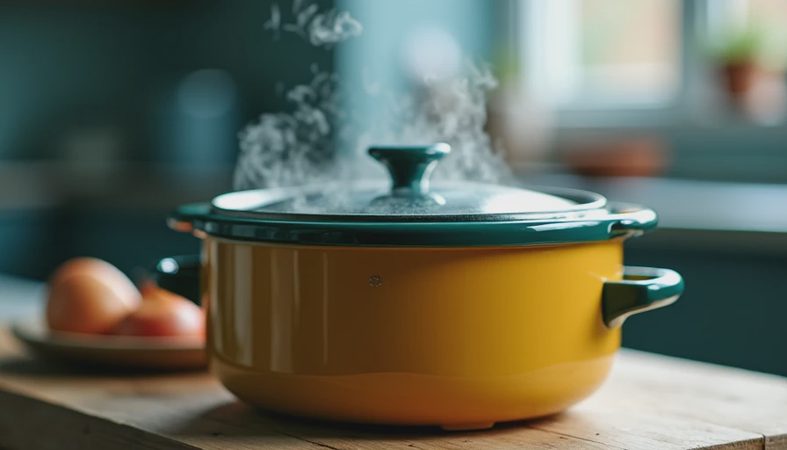
Look for a removable insert, clear temperature controls, sturdy handles, and a lid that sits securely. An insert that can go in the dishwasher is valuable after a sticky barbecue chicken dinner. Programmable timers can switch to warming, but warming is not a substitute for refrigeration if you will be away all day after cooking finishes.
I prefer simple controls over a crowded digital panel. In my kitchen, the cooker is stored in a lower cabinet beside the mixing bowls, not displayed like a design object. That placement means I can pull it out with one hand while Henry stands on his step stool asking whether the cheese is ready yet. Function wins again.
The takeaway for this week
Choose one forgiving recipe, shop for six ingredients, and build in leftovers. Start with chicken thighs, beans, lentils, or chuck roast rather than delicate seafood or quick-cooking pasta. Write the cooking time on a sticky note before leaving in the morning, and finish with something fresh such as lime, parsley, grated cheese, or sliced scallions.
Crockpot meals are not about pretending dinner happens effortlessly. They are about moving the effort to a calmer part of the day. A great kitchen does not happen by accident. It happens by how you live in it, including the nights when the counter is cluttered, the schedule changes, and everyone still needs to eat.

No comments yet — be the first to share a thought.