Last Tuesday, Henry climbed onto his step stool to stir pasta, and the first thing I noticed was not the sauce. It was the pot: a too-small saucepan that was trying to do the job of a Dutch oven and losing. That is the real lesson with cooking pot cookware. The shiny set on the box is not the same thing as the pieces you will reach for on a random weeknight when you are tired, hungry, and trying not to scrub burnt rice off the bottom later. A great kitchen doesn't happen by accident. It happens by how you live in it.
How I choose cooking pot cookware without buying a giant set
For cooking pot cookware, I start with the pieces that cover 80 percent of real meals: a 2-quart saucepan for oatmeal, rice, and reheating soup; a 3-quart saucepan or saucier for sauces and pasta water; and a 5- or 6-quart Dutch oven for chili, braises, and tomato sauce that needs room to move. If you cook for one or two, that trio is usually enough. If you feed a family, the Dutch oven earns its keep fast, especially on nights when one burner is handling noodles and another is reducing sauce. A 10- or 12-inch sauté pan is also worth a look, but I would buy it because you need it, not because it came in a matching bundle.
I like to think in price bands, because that is where the decisions get real. A sturdy stainless saucepan from Tramontina or Cuisinart often lands around $70 to $120. All-Clad can run higher, sometimes well above $150, and you are paying for fit, finish, and a pan that feels like it will still be around when your kid is tall enough to reach the stove. For Dutch ovens, Lodge usually sits in the $80 to $120 range, while Le Creuset is a bigger splurge at roughly $300 and up. None of those are wrong. The mistake is buying three pieces you never use instead of one pot that becomes part of your weekday rhythm.
Materials matter, but not in the glossy-magazine way. Stainless steel is my default because it browns well, handles acid, and survives tomato sauce, stock, and a little too much heat from a distracted cook. Nonstick has its place for eggs or delicate fish, but I would not make it my main pot material. Enameled cast iron is wonderful for soups and braises because it holds heat evenly and looks good enough to go from stove to table without apologizing. Bare cast iron is great for some jobs, but for a family kitchen it can be a little high-maintenance if your goal is easy cleanup after a Tuesday night dinner.
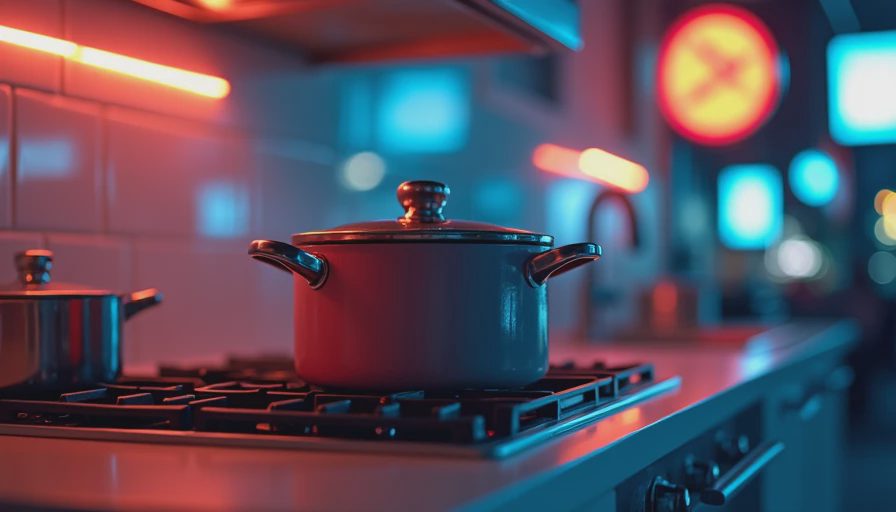
The small details that make weeknight cooking easier
This is where cooking pot cookware goes from decent to genuinely useful. A lid that fits well keeps moisture in when you are simmering rice or braising chicken thighs. A helper handle on a 5-quart or larger pot matters more than people think, because lifting four quarts of soup with one hand and a dish towel is how you regret dinner. Riveted handles are usually sturdier than welded ones, and a handle that stays cool longer can save you from reaching for the oven mitt every two minutes. I also look for a base that sits flat and feels heavy enough to resist hot spots, especially on gas burners where a thin pan can scorch in the center.
If you have induction, check that the pot is induction-ready before you bring it home. If you have a small kitchen, measure the cabinet shelf before you buy a giant stockpot that will only live on the floor of the pantry. I have seen plenty of families with a 24-inch-deep lower cabinet where the one most-used pot lived at the front and everything else turned into a nesting problem. In a real kitchen, storage is part of the purchase price. A beautiful pot that never fits under the sink is just expensive clutter.
The same logic applies to vintage finds. I love a good Revere Ware or Farberware saucepan from an estate sale if the handle is tight and the bottom is flat. Those pieces can outlast trendier ones because they were made when a simple saucepan was supposed to be a workhorse, not a social media prop. I have picked up a $3 saucepan at a Chicago estate sale and used it for three years straight. No one at the table notices the brand, but everyone notices whether the noodles are done on time.
Where to spend and where to save
If your budget is under $100, buy one excellent saucepan and one inexpensive Dutch oven or stockpot, then stop. That gives you enough to cook grains, soup, sauce, and a one-pot dinner without filling the cabinet with duplicates. In the $150 to $300 range, you can build a more balanced core with a stainless saucepan, a sauté pan, and an enameled Dutch oven from brands like Tramontina, Cuisinart, or Lodge. If you want a lifetime set, spend up on the pieces you touch every week, not the specialty sizes that only show up for holiday candy or lobster boils.
The other place to save is matching. Matching sets look tidy in the store, but most households do not use cookware that way. One family might need a deep 3-quart saucepan for pasta sauce, while another cooks rice three times a week and wants a small pot with a heavy lid. When I designed kitchens, I saw the same pattern over and over: the best cooking pot cookware was rarely the prettiest box on the shelf. It was the one with the most honest shape, the fewest gimmicks, and the easiest cleanup after dinner.

My quick test before I buy anything
I always do the handle test first. If the pot feels awkward empty, it will feel worse full. Then I check the lid, the rim, and the interior finish. A slightly rolled rim helps with pouring. A smooth interior makes washing easier, and a matte black interior on enameled cast iron can hide stains better than a pale one. I also imagine the pot on my own stove, next to a kettle, a cutting board, and the inevitable pile of carrots Henry peeled unevenly. That mental picture tells me more than any marketing copy ever will.
If you are trying to upgrade without overbuying, start this week by pulling every pot out of your cabinet. Put aside the ones with loose handles, warped bottoms, or lids that never fit. Then choose the one pot you use most and the one you always wish was a little better. Those are the pieces worth replacing first. The right cooking pot cookware makes dinner feel less like a negotiation and more like a routine you can actually keep. That is the point. A great kitchen doesn't happen by accident. It happens by how you live in it.



No comments yet — be the first to share a thought.