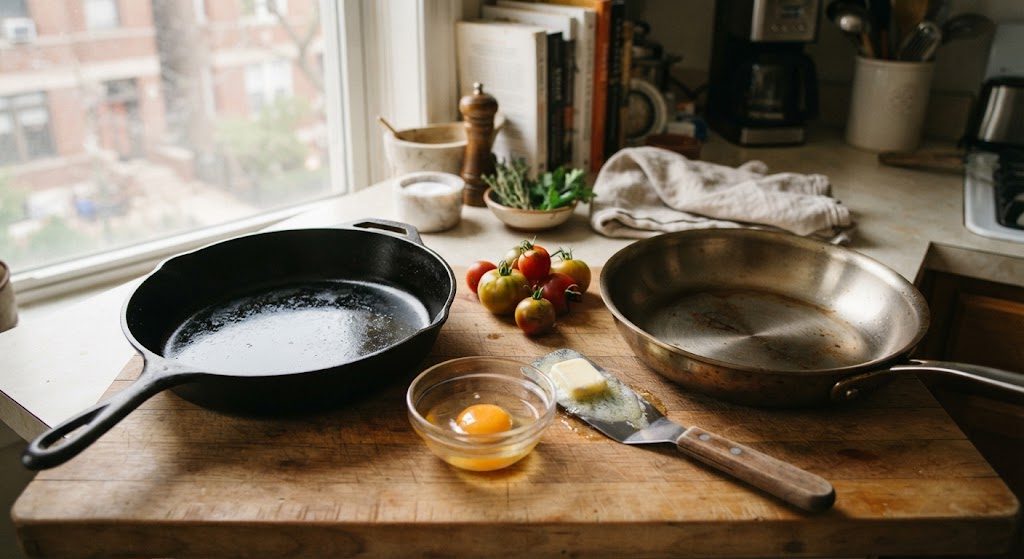
I own one cast iron skillet. I own two stainless steel pans. I use all three every week, and I've burned things in all of them.
That's the first thing to know about the cast iron versus stainless steel debate. It's not a debate. It's a question of what you're cooking and how much patience you have for maintenance. Both are good pans. Neither is a personality. If someone on the internet is yelling at you to pick a side, they're probably selling something.
I'm not selling anything. I'm just a former kitchen designer who's stood in enough cookware aisles with overwhelmed clients to know that this question comes up constantly. So here's what I tell them.
The Real Difference
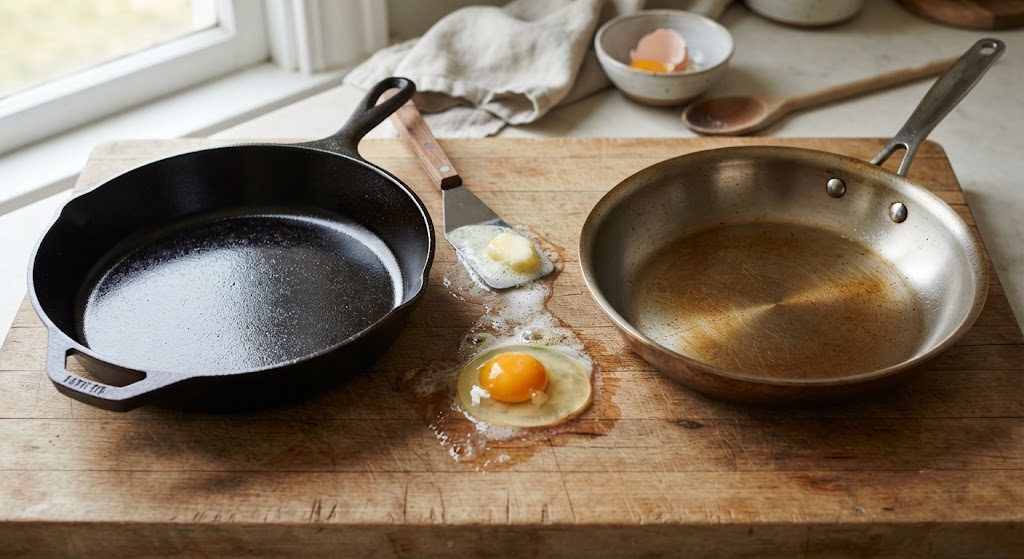
Cast iron is heavy, cheap, and holds heat like nothing else. It also rusts if you look at it wrong and requires a maintenance routine that some people find meditative and others find exhausting.
Stainless steel is lighter, faster to heat, indifferent to acid, and goes in the dishwasher. It also sticks if you don't know how to use it, and cheap stainless warps under high heat.
Cast iron excels at heat retention and high-heat searing but requires regular seasoning and can't handle acidic foods. Stainless steel is more versatile for everyday cooking — faster, lighter, dishwasher-safe, and works with any ingredient — but requires proper preheating to prevent sticking. That's the summary I give clients. Then we get into the details.
What Cast Iron Does Best
If you want a dark, crusty sear on a steak or a pork chop, cast iron is the answer. The pan holds so much heat that when a cold piece of meat hits the surface, the temperature barely drops. That's the secret to a good sear — the pan stays hot enough to brown the meat immediately instead of steaming it.
I use my cast iron skillet for searing, for roasting a whole chicken, for cornbread, for Dutch babies on Saturday mornings when Henry wants to watch something puff up in the oven. The pan goes from stovetop to oven without complaint. No plastic handle to melt. No non-stick coating to worry about at high heat. It's a single piece of metal that will outlive me.
The price is also absurdly low. A Lodge 10-inch cast iron skillet costs around $25. That's less than a takeout dinner for two. For a pan that will last decades, that's hard to beat.
The trade-off is maintenance. Cast iron seasoning — the polymerized oil that creates the non-stick surface — is not a one-time project. You cook, you clean without soap, you dry immediately, you rub on a thin layer of oil. You can't leave it soaking in the sink. You can't put it in the dishwasher. You can't simmer a tomato sauce in it for an hour unless you want your seasoning stripped and your sauce tasting metallic. Henry once "helped" by scrubbing my cast iron with dish soap and a steel wool pad. I took a breath. I re-seasoned. The pan was fine. These things are forgiving in the long run, just high-maintenance in the daily.
What Stainless Steel Does Best
Stainless steel is the pan I reach for on a Tuesday night when I need dinner on the table and I don't want to think about the pan afterward.
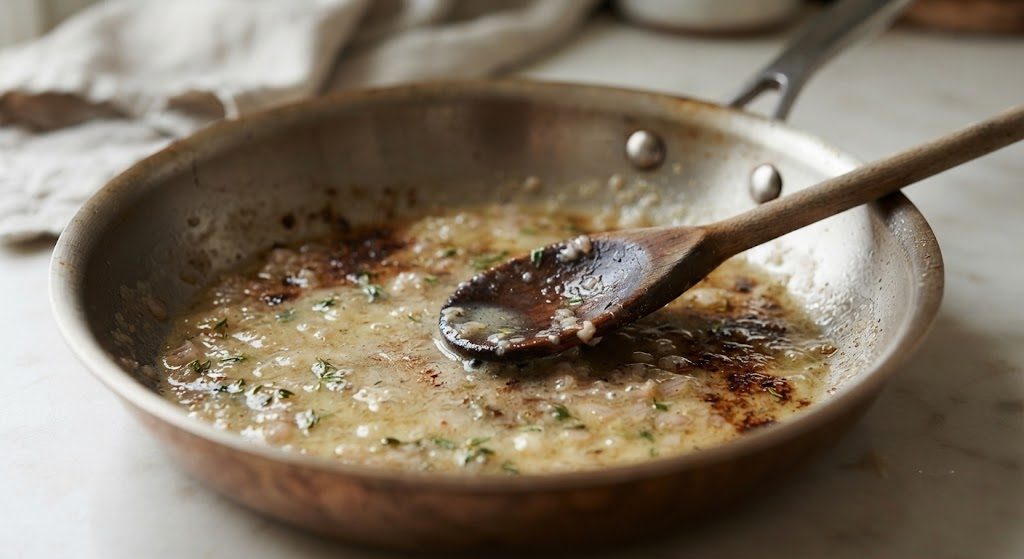
It heats up faster than cast iron. It's lighter. It handles acidic foods without complaint — tomato sauces, wine reductions, lemon pan sauces, anything with vinegar. I can deglaze with wine and scrape up the fond without worrying about the seasoning. I can finish a pan sauce while the pasta drains. The pan goes in the dishwasher when I'm too tired to hand-wash.
The sticking issue is real, but it's a technique problem, not a pan problem. Stainless steel requires proper preheating to prevent sticking — heat the dry pan first, then add oil, then wait until the oil shimmers. Food releases naturally when the surface is hot enough. If you put cold oil in a cold pan and then add a chicken breast, it will stick. That's not the pan's fault.
A good stainless skillet costs more than cast iron. The All-Clad D3 10-inch runs around $130. The Tramontina tri-ply is about $45 and performs nearly identically. I have one of each. The Tramontina is in my kitchen right now with pancake batter crusted on the stove next to it. Both work.
When I Use Which
I keep the cast iron on the stovetop because it's too heavy to move in and out of a cabinet. It lives on the back burner, ready for weekend searing, roasting, and baking. I keep the stainless in a drawer under the cooktop, easier to grab for quick weeknight cooking.
If I'm making steak, cast iron. If I'm making chicken thighs with a pan sauce, stainless. If I'm making scrambled eggs, honestly, neither — I use a non-stick pan because Henry likes his eggs "not brown" and I don't have the energy to fight about it at 7 AM. If I'm making tomato sauce, stainless. If I'm making cornbread, cast iron. If I'm making a one-pan dinner that starts on the stove and finishes in the oven, either works, but cast iron looks better on the table.
Which Should You Buy First?
If you're building a kitchen from scratch or replacing cheap non-stick pans that are peeling, start with stainless steel. It's more versatile. It handles every ingredient. It requires almost no maintenance beyond basic cleaning. It's the pan that will teach you how to cook — because you have to learn heat control, because you have to preheat properly, because the pan responds to what you do instead of compensating for you.
For most home cooks, a stainless steel skillet is the better first pan — it's more versatile, handles acidic foods, and requires less daily maintenance than cast iron. Learn on stainless. Then add cast iron when you want to sear a steak or bake a Dutch baby.
If you already have a stainless pan you love and you're ready to add a second workhorse, get the cast iron. It's cheap, it's indestructible, and it does things stainless can't. The two pans complement each other. This isn't a loyalty test.
What I've Learned From Owning Both
Three years ago I would have told you cast iron was overrated. I'd read too many Reddit threads where people talked about seasoning like it was a religion, and I'd scrubbed too many rust spots off my own pan to feel anything but resentment.
Then I stopped treating it like a project. I cook with it, I wipe it out, I oil it occasionally. The seasoning built up on its own. The pan got better without me trying. Now it's the pan I use when I want to cook something that feels like an event — a Saturday steak, a roast chicken, a cobbler with fruit from the farmers market.
The stainless is the weekday pan. The cast iron is the weekend pan. Together they cover almost everything.
A great kitchen doesn't happen by accident. It happens by how you live in it.

No comments yet — be the first to share a thought.