Last week, a neighbor asked me to look at her new kitchen cabinets. The finish was gorgeous, the hardware was brass, and she'd spent more than my first car on the whole remodel. But she couldn't open the dishwasher without backing into the island. Here's the thing: kitchen cabinet design is about how you move, cook, and live in a room, not just how the doors photograph. Over a decade of designing Chicago kitchens, I've seen the same seven mistakes at every budget level. These are the rules I apply to my own family's kitchen, where pancake batter crusts on the stove at least once a week.
Start With Work Zones, Not the Work Triangle
The old work triangle—stove, sink, fridge—hasn't been relevant since kitchens became the family command center. Instead, think in zones: prep, cook, clean, and coffee. When you plan your kitchen cabinet design, map each zone to its own set of cabinets. For example, keep mixing bowls and measuring cups near the counter where you chop, and pots and pans beside the stove. In my own kitchen, a vertical pullout for baking sheets next to the oven means I no longer wrestle sheet pans off a stacked shelf every week. A great kitchen doesn't happen by accident. It happens by how you live in it.
Cabinet Door Style: Shaker Is Classic, Slab Is Smarter
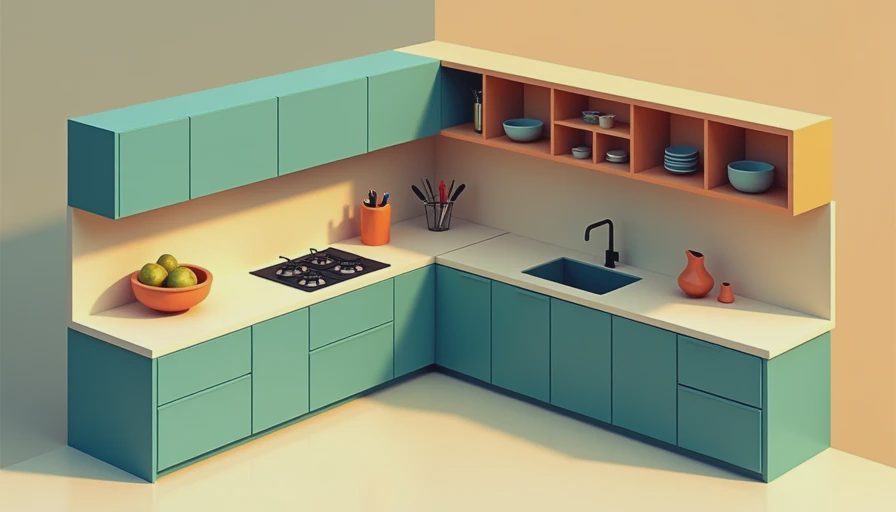
If you ask me, shaker doors are safe, but flat-panel slab doors are the workhorse of modern kitchen cabinet design. There's no trim to catch crumbs and no crevices for grease to hide in. Slab fronts look as good with a farmhouse sink as with a matte black faucet. I recently specified slab fronts in a three-flat renovation using maple plywood with clear lacquer—around $12,000 for a standard 10-by-10 kitchen including hardware. But price isn't the whole story. If your kitchen gets hard daily use, a matte laminate on slab fronts resists fingerprints far better than a glossy painted shaker. Think about how your family actually opens those doors. In my house, Henry's sticky fingers are the real test.
Storage: The Real Cost Is Inside the Box
Custom kitchen cabinet design doesn't mean fancy moulding; it means drawers that actually hold your cookware. I've pulled out more wasted dead corners than I can count. Spend your money on interior accessories: a D-shaped pullout for pots, a wooden knife block drawer, and a trash-and-recycling rollout with soft-close guides. These add roughly $1,500 to $3,000 to a remodel, but they make the difference between a kitchen that looks good and one that works. If you're on a budget, consider IKEA's Sektion cabinets with custom fronts—a trick designers use all the time. The boxes are surprisingly sturdy, and you can spend the savings on Blum soft-close hardware.
Lighting and Hardware: The 10% That Makes Cabinets Look Expensive
Undercabinet lighting is the single best upgrade you can make to any kitchen. At our house, we installed dimmable LED strips for about $200, and suddenly the countertop is a work surface, not a shadow pit. Don't overlook hardware placement either. Pulls on shaker doors should sit about 2.5 to 3 inches from the bottom corner of the door—not dead center, which looks like a mistake. For slab doors, a long bar handle feels more modern. Choose a finish that matches your faucet; mixing brushed nickel and chrome in the same small kitchen is a classic error I still see.
The kitchen cabinet design Mistake I See in Almost Every Remodel
Forgetting to think about the ceiling. Most kitchens get upper cabinets that stop a foot below the ceiling, which wastes storage. But if you go full-height, you need a step stool to reach anything. My compromise: full-height pantry cabinets on one wall, and uppers with a soffit that matches the trim. That gives you the storage without the awkward 10-foot ladder. When homeowners tell me they regret their kitchen cabinet design, nine times out of ten it's because they ignored the vertical space. It's the first thing I measure on a site visit.

What Your Cabinet Material Says Before You Cook a Single Meal
Cabinet boxes are the part you never see, which is exactly why cheap builders use particleboard. A 12-year-old IKEA kitchen I inspected had swollen corners from a leaky sink, but the Blum hinges were fine. If you're choosing between plywood and MDF, plywood with a hardwood plywood box is worth the extra 10 to 15 percent. MDF paints beautifully, but it doesn't like moisture. And thermofoil can bubble after a decade of steam from a dishwasher. You don't need premium wood for every door, but the box should be plywood. I once watched a client spend $18,000 on cabinets with a cardboard-core back panel—don't do that.
Budget-Friendly Kitchen Cabinet Design Upgrades That Won't Break the Bank
You don't always need a full tear-out. Repainting old cabinets with a quality cabinet enamel—for example, Benjamin Moore's Advance line—costs about $200 in paint and a weekend of your time. Swapping out hinges and pulls gives the whole kitchen a new personality. If the boxes are solid, refacing with new doors is a solid middle ground at roughly half the cost of new cabinets. One of the smartest moves I ever made was keeping my original maple cabinets in the rental we owned and just updating the hardware—the place rented out in a week. So before you spend $30,000 on new boxes, ask yourself what your current kitchen cabinet design is missing. It might be a pullout shelf, not a full remodel.
If you're planning a remodel, start by measuring your space and the things you own, not by choosing a wood stain. And remember: a great kitchen doesn't happen by accident. It happens by how you live in it.

No comments yet — be the first to share a thought.